Ryedale Woodturners
This website is being updated from August 2022. This is an archive page.

Philip Greenwood
Thursday 2 September 2021
Snainton Village Hall
Former club chairman Philip Greenwood has provided a number or IRDs (Interactive Remote Demonstrations) for us over the lockdown, at a very reasonable price. He stepped in at short notice for our first live demonstration on our return to meetings in the Village Hall, following on from Martyn's excellent segmented turning demonstration in August.
Lockdown activity

Philip started with a description of changes to his work over the lockdown - which involved a couple of thousand pounds investment in video and sound technology, in order to present online demonstrations. He thinks about 30 other professionals have done the same, with some not returning to live demonstrations. It does mean now that Philip can be up at midnight demonstrating to an audience in America.
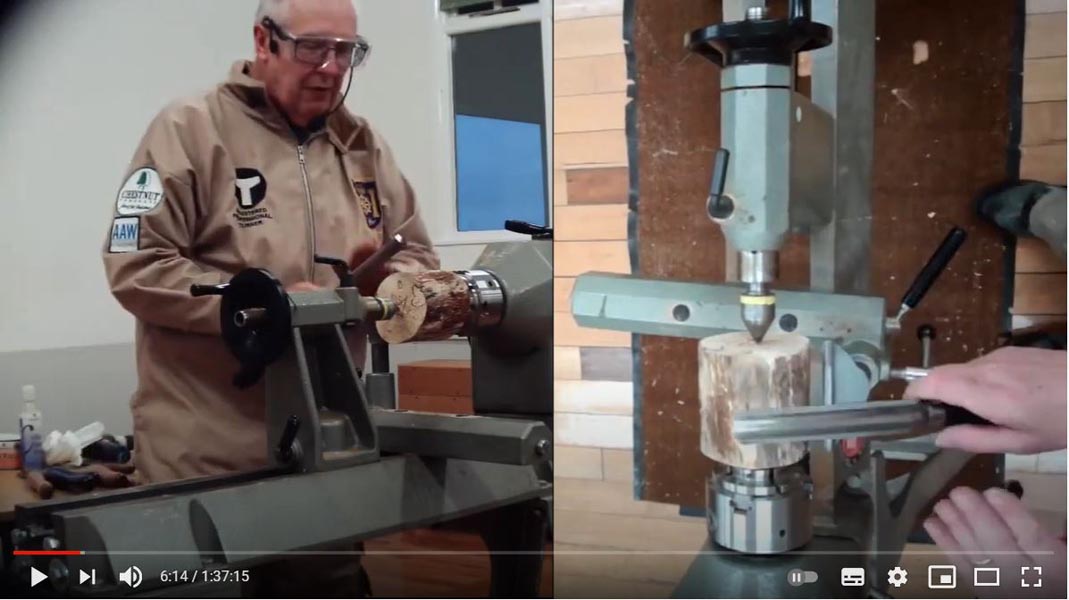
Philip helped us with advice on setting up for videoing and broadcasting this live demonstration via Zoom - which we did for the second time. Not perfect, particularly with sound, but we are getting better, and there is a video of this demonstration available online.
Turning an apple
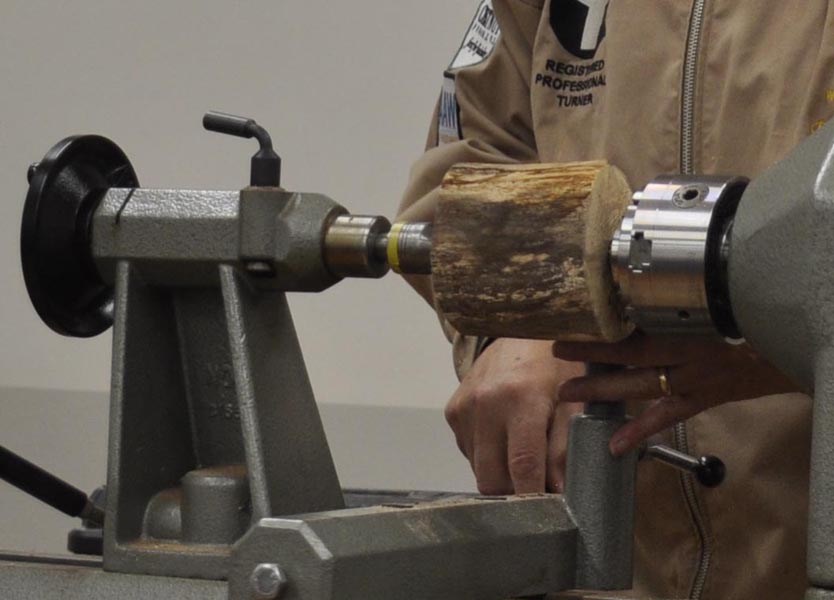
A spalted beech blank had centres marked roughly, using a thumb and pencil method. It was then mounted between centres, turned to round, and a spigot put on what would become the bottom of an apple.

Rather than using a pair of calipers, Philip has made a simple gauge out of plywood, which measures a 44mm spigot on one end, and a 50mm recess on the other, to fit the 50 mm chuck on the lathe. He explained the value of getting the correct dimension, so that the chuck jaws do not dig in to the wood on points, and the full circle of the jaws are in contact with the spigot.
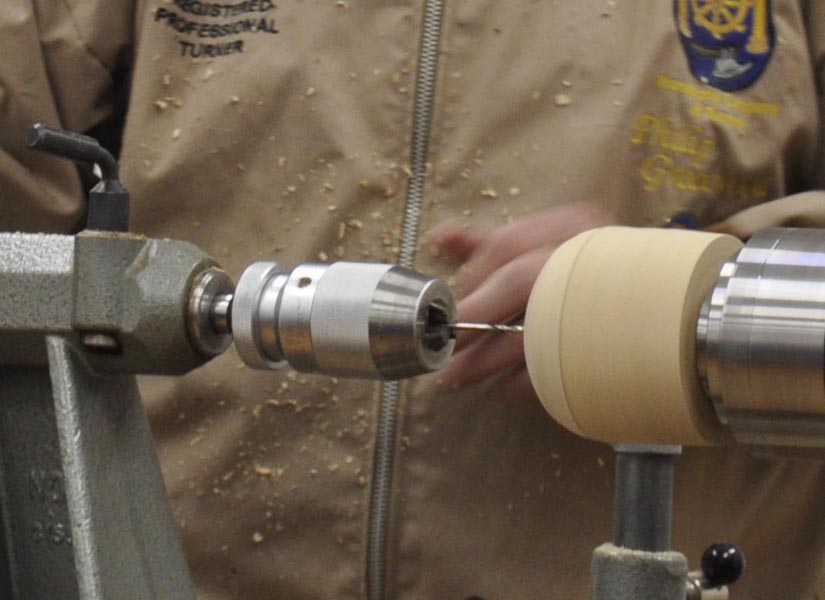
The blank was remounted on the spigot and the top of the apple was turned. A 4 mm hole was drilled. This would become the hole for a stalk - either turned or a piece of hawthorn twig - but also a way of holding to turn the bottom of the apple.
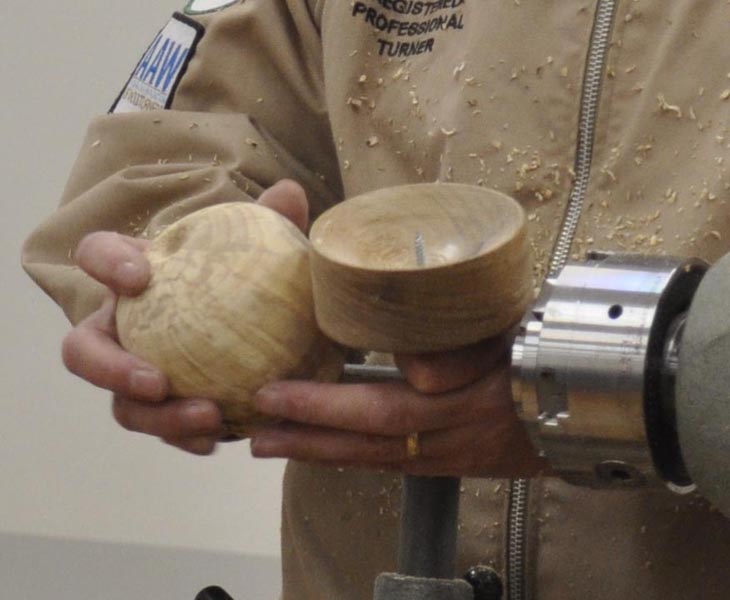
A purpose made screw chuck was used to continue the turning. Cup shaped with a screw through its centre, which holds the apple firmly while the rest of the apple is turned. With the bottom turned, a small hole is drilled and a clove serves well as the stamen at the bottom of the apple.
Skeleton clock

Phil's second project used a skeleton clock. A spalted beech blank was mounted on the chuck using a recess, calipers used to measure the width of the clock insert, and a parting chisel used to create a groove at this diameter.
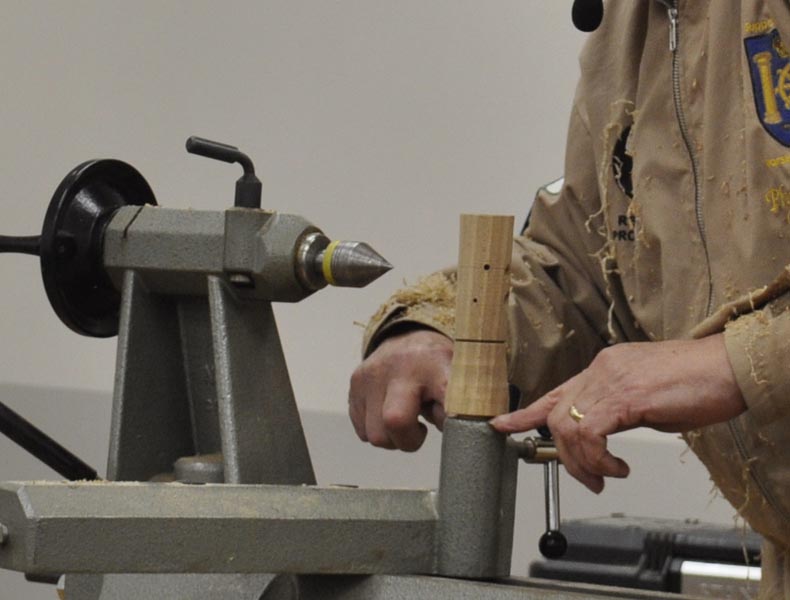
The circular surround was to be joined to the base with a dowel, so needed a hole drilled. To ensure this was square to the surface, Phil had made a drilling jig which fitted into the toolpost hole, and had various guide holes drilled through. Metal versions can be bought (Sorby do one), but this was as good as free to make.
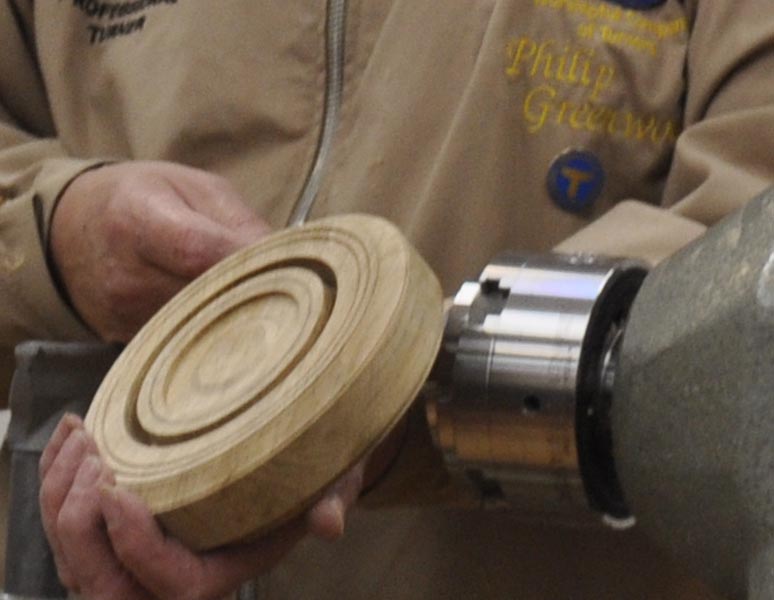
A little decoration on the surround - a bead - and then the centre was taken out, or more correctly the ring was removed from the centre.. Carefully listening for the change of sound as the chisel broke through to leave the ring and the centre, which was to become the base for the clock.
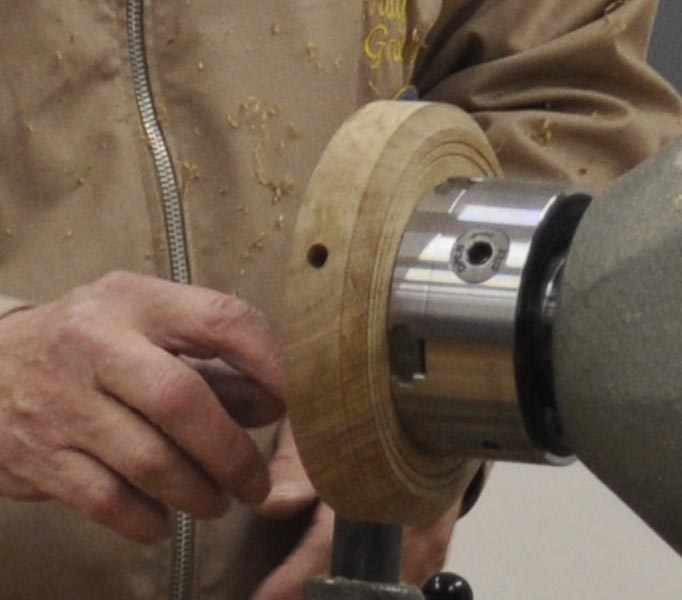
The centre was shaped so that it would take the clock ring. The inner diameter of the ring fitted nicely on the outside of the chuck jaws, giving a very secure method of holding to clean it up. This was done from both sides, taking great care to avoid contact with the metal of the jaws.
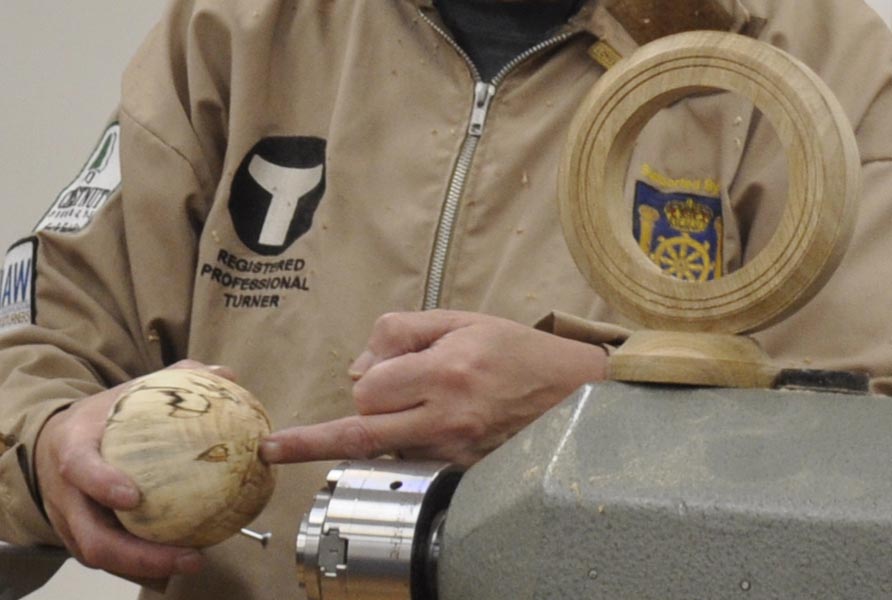
No sanding was attempted, and the clock was no glued together, with further work to be done to finish off.
Two projects showing a range of techniques, and a couple of useful jigs. Many thanks once again Philip.
Extra photos and club members' work
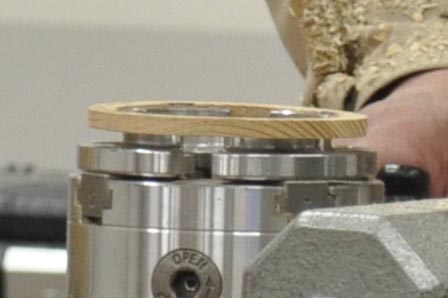
Demonstration of how the jaws fit in to a recess
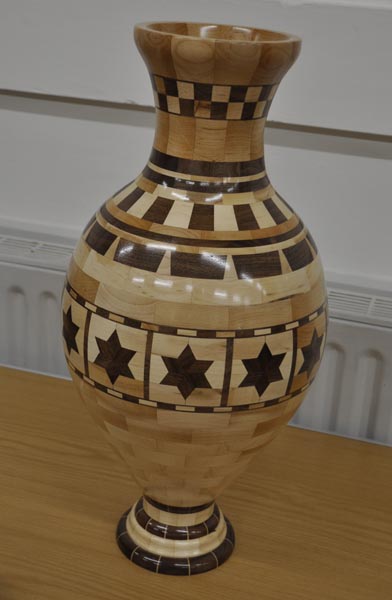
Martyn's completed vase from his August demonstration

Small barrel shaped box