Ryedale Woodturners
This website is being updated from August 2022. This is an archive page.
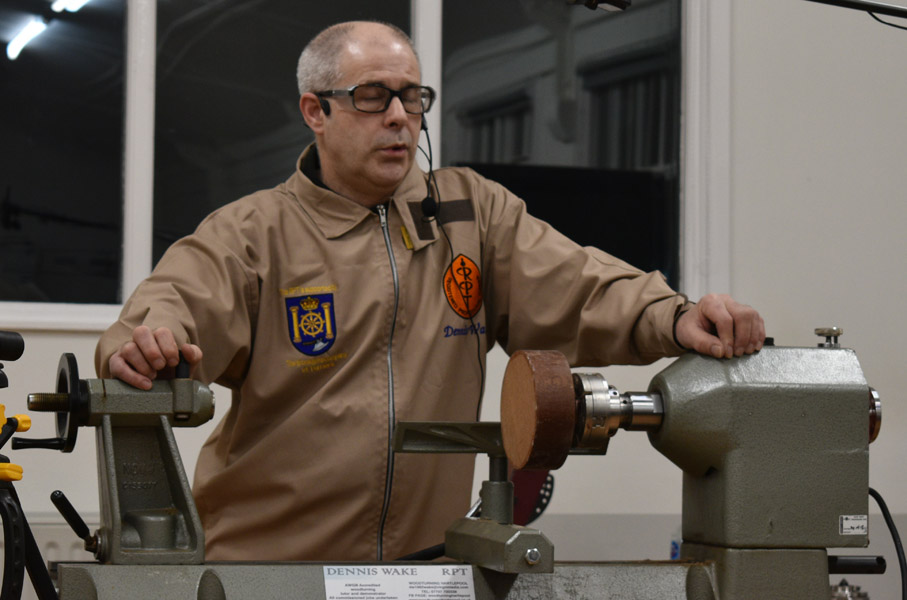
Dennis Wake
Thursday 3 March 2022
Snainton Village Hall
Dennis Wake made his first live appearance at the club, having done an online IRD for us back in May 2021. Dennis has a woodturning tuition and production business up in Hartlepool. It was good to welcome a professional demonstrator back to the club, after a number of impromptu club nights when things have not quite gone according to plan.
3 part pedestal bowl
Dennis chose to make a 3 part pedestal bowl, which apparently is a standard test piece for the RPT certificate in woodturning. An ideal choice for us, giving a number of new starters some insight into bowl and spindle turning techniques.
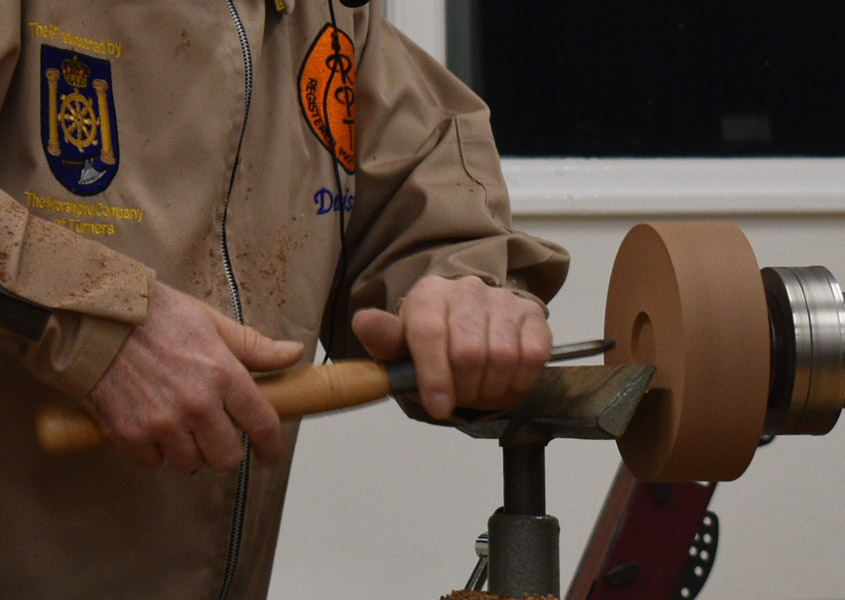
He started with the base, held on a screw chuck. He used a parting tool to create a recess to hold the piece in his O'Donnell jaws once reversed. Not too deep - not necessary to hold a piece this size. He also tidied up the surface, creating a slight concave surface. He didn't do any sanding on the evening, though were he not demonstrating he would take the bottom of the base to a finish at this point.

Dennis talked about the correct tools for different jobs. He explained the difference between cross-grain turning (bowls or faceplate) and long-grain turning (spindles), using the common analogy of a bunch of straws running lengthwise or end-on. The base was cross grain, so it was important not to use a roughing gouge: use a bowl gouge to rough out. He passed round a broken roughing gouge blade to explain why - it had snapped at the "tang", the relatively thin part of the blade that slots into the handle. A bowl gouge, milled from round bar, has a much thicker end embedded in the handle, making for more resistance should the blade catch in the end-grain fibres.
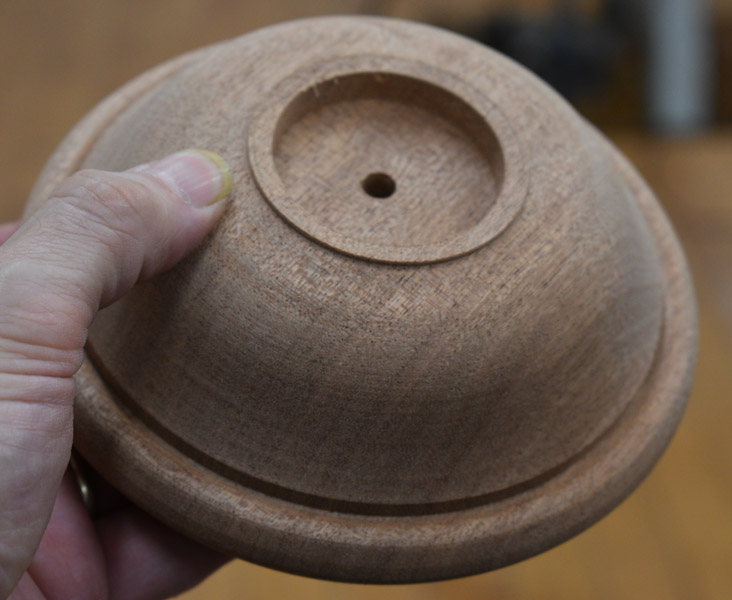
The base was reversed, held in the recess, and turned to shape. A small collar was left - this is where the stem will locate. I don't think Dennis mentioned the type of wood, but I think the stem and base might have been iroko, and the bowl was definitely oak.
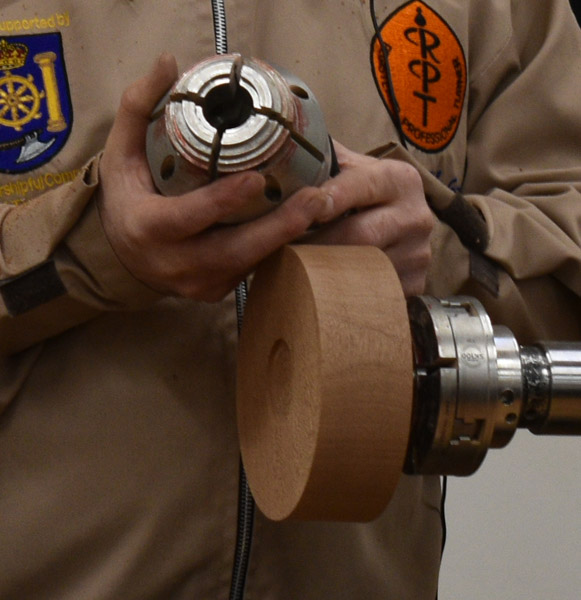
To hold the base, and later the bowl, Dennis used "O'Donnell jaws". These are an Axminster jaw set, designed by Mike O'Donnell. They are very good for work where the recess had a shallow flat bottom, and their height and tapered profile allows for close detail work at the bottom of a bowl.

Next came the bowl. Again started on a screw chuck - the hole will be hidden beneath the stem. A recess was cut, then the bowl was reversed ready to hollow. Dennis talked through different bowl gouge profiles - a fingernail grind which can remove large amounts of material (possibly too much), a 45 degree "standard grind", and a 60 degree grind which is good for pushing across the bottom of a bowl. Choose the right tool for the job.
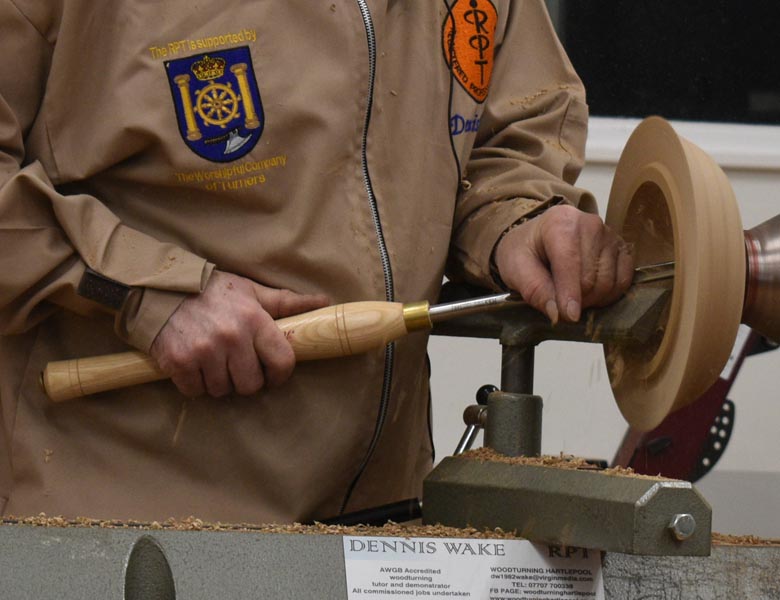
A hint for when you find it difficult to start the cut on the rim of the bowl - you can create a small ledge to rub the bevel on using a parting tool. Or you can make this small ledge with the bowl gouge, orientated to create the groove. To keep the gouge cutting towards the centre, it helps to angle in the tool rest to the bowl once it is hollowed out a little.
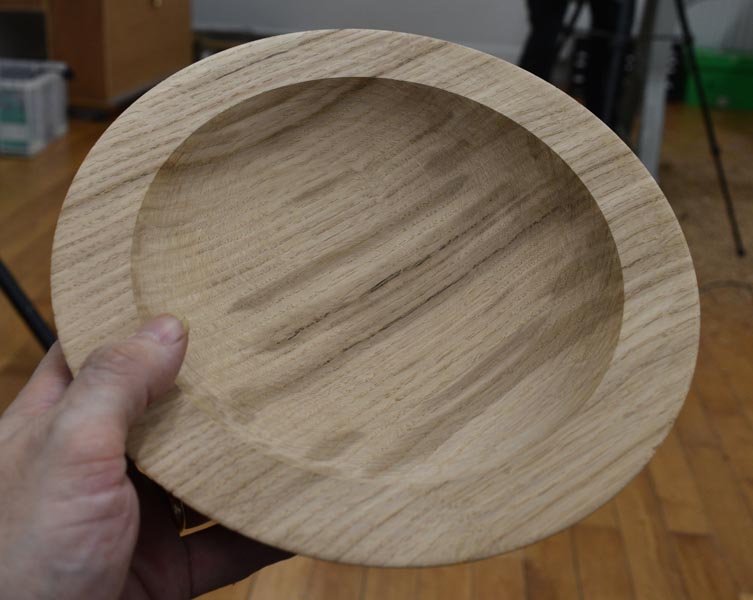
The bowl was finished and dismounted, again for the sake of not taking up time in the demonstration, without sanding or finishing which would normally be done at this stage. The same recess measurements were made on the base and the bowl, to locate the stem.
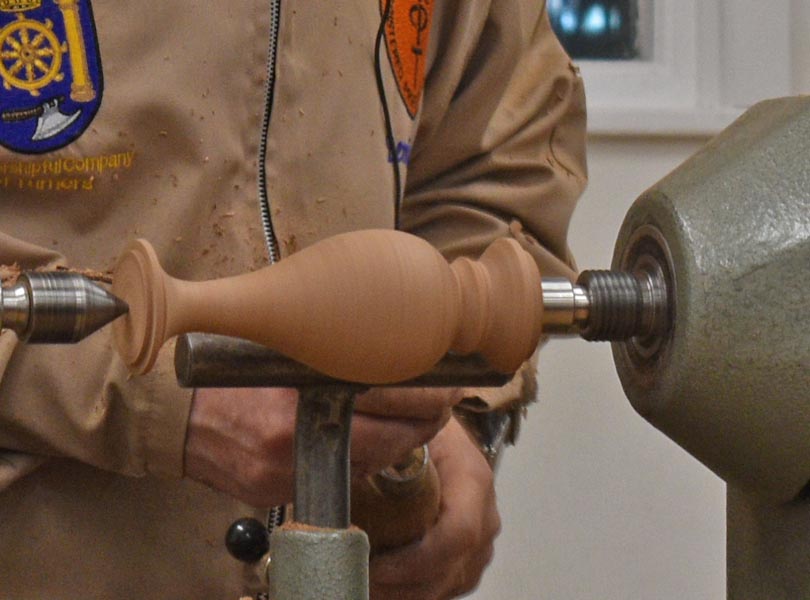 Next came the shaping of the spindle, using a spindle gouge, with final cuts taken (on the down slope) using a skew chisel. Remember that with a skew only the middle of the blade should be in contact, the points MUST be kept out of contact to avoid a horrible catch.


Having turned all three pieces, they were dry jointed so that judgement could be made on the overall shape. Dennis felt the stem was too thick, so refined this a little more before deciding the shape was right.
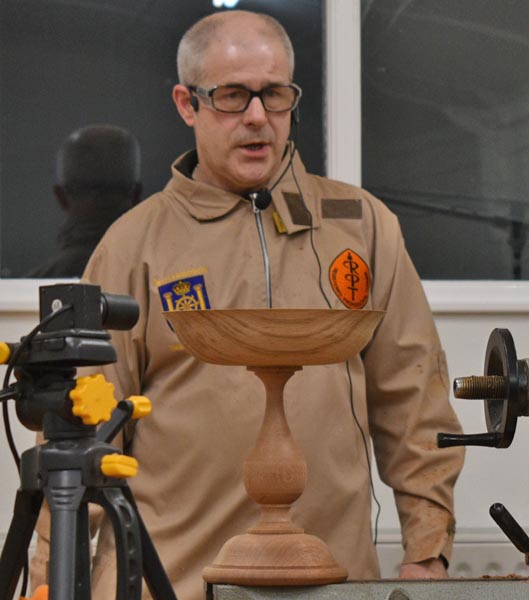
With a narrower neck and minor adjustments to the rest (and the time approaching 10 o'clock), Dennis was satisfied.
A very clear presentation of skills, techniques and design choices. As John Whiteley said in his summary, the demonstration gave many clear instructions to those new to woodturning, as well as reminding the more experienced among us of things we need to remember.
Some of the items on display on the evening
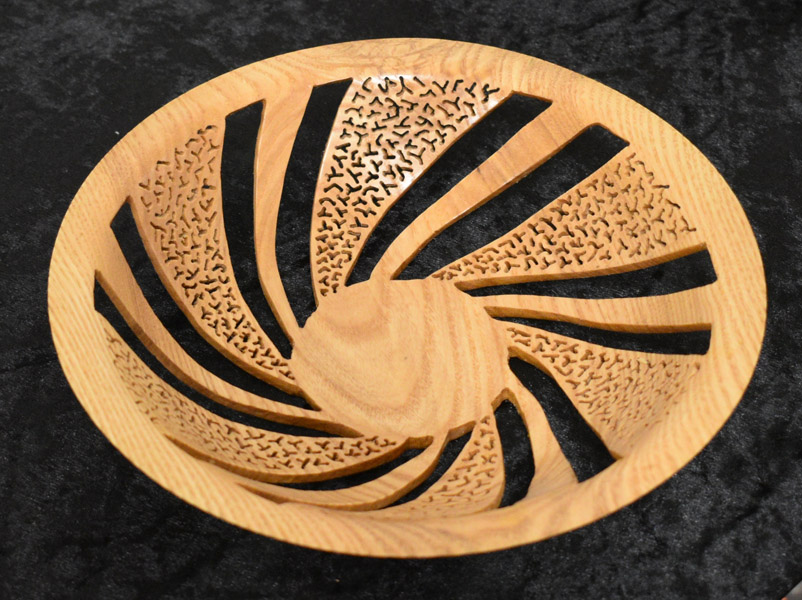
Pierced dish

Bowl

Burr elm bowl

Pierced edge dish
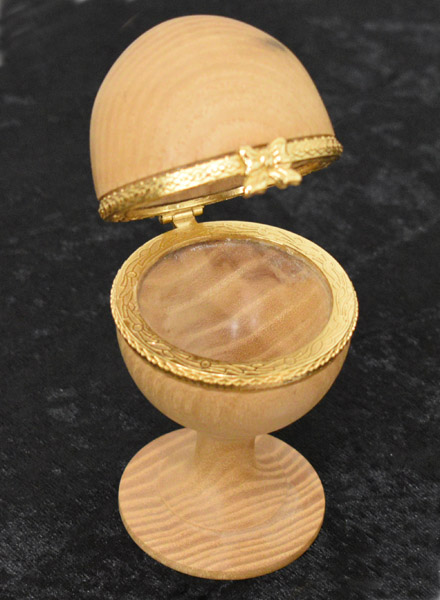
Egg cup box
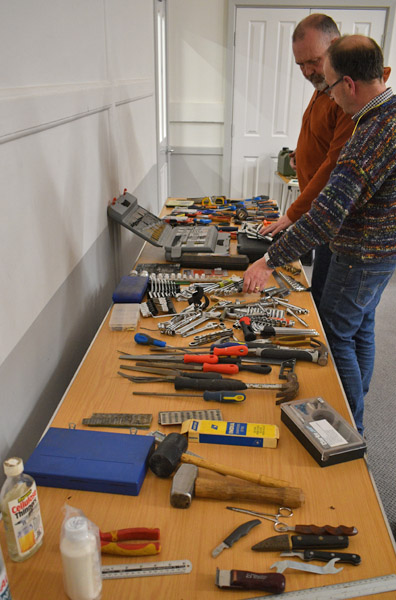
Lance's tool sale
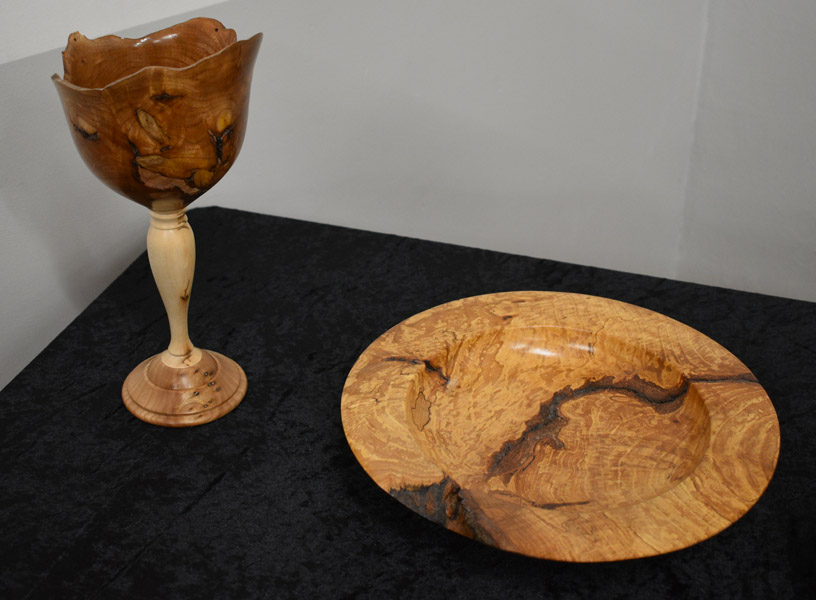
Natural edge goblet and bowl

Hollow form on driftwood
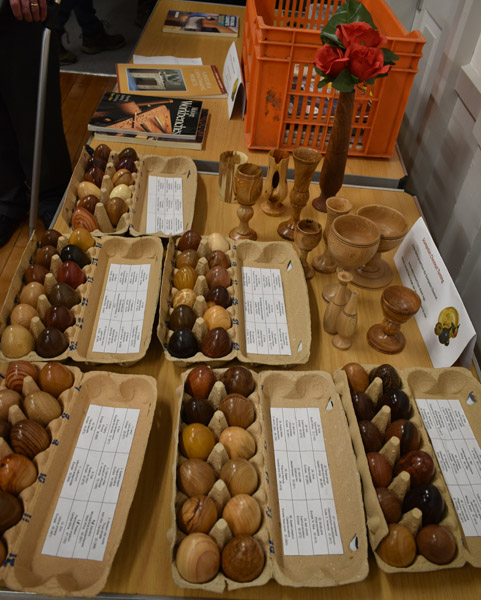
71 different timber eggs, plus chestnut turning.

Pierced hollow form

Spalted hollow form

Pedestal bowl