Ryedale Woodturners
This website is being updated from August 2022. This is an archive page.

John Whiteley
Thursday 5 March 2020
Snainton Village Hall
Club chairman John Whiteley gave a demonstration once again this month, having last done an unusual demo on making tools back in September 2018. This one was firmly rooted in exploring woodturning techniques.
Flowers
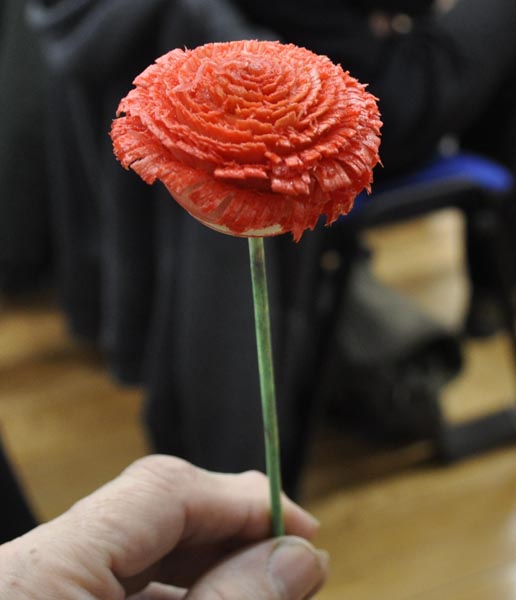
John started with a quick introductory exercise in making flowers. Taking a freshly cut piece of hazel (the key to the success of the project is "freshly cut") he quickly turned a series of rings in the hazel, which fluffed out in an example of torn grain you would not normally want to see. A hemispherical base was formed on the other side.
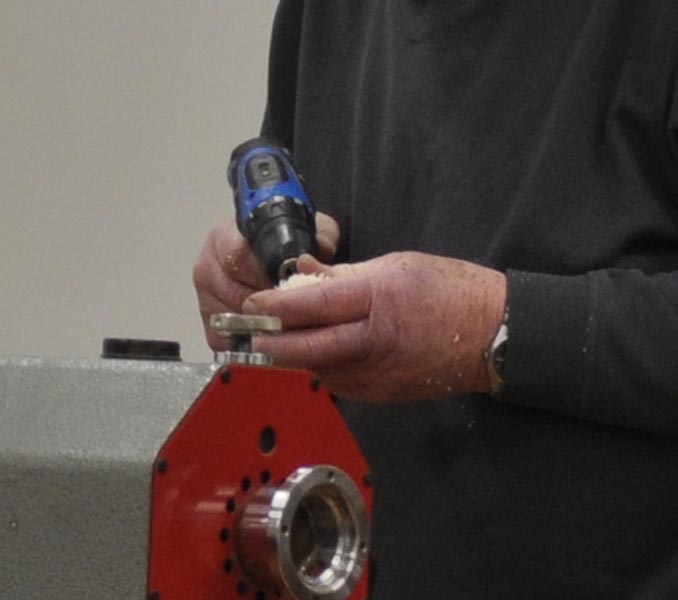
Removed from the lathe, a small hole was drilled, and a kebab stick dyed green was inserted with a dab of superglue. The flower was then dipped in a jar of red dye, which soaked into the "petals". 5 minutes. Hundreds sold over the years for £1.
Hollow torus
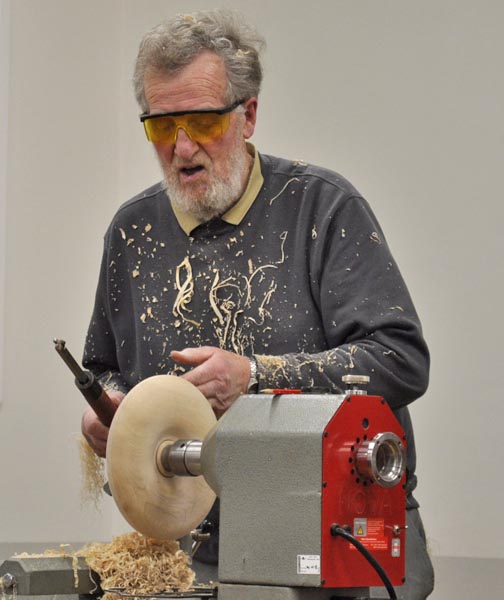
For the main project of the evening, John mounted a sycamore blank and proceeded to turn it to a doughnut shape. It was held on a screw chuck threaded directly on to the drive spindle (well, at least via a thread size convertor). A bowl gouge was used, but also John removed some rings (done on purpose) using a skew freehand against the wood.
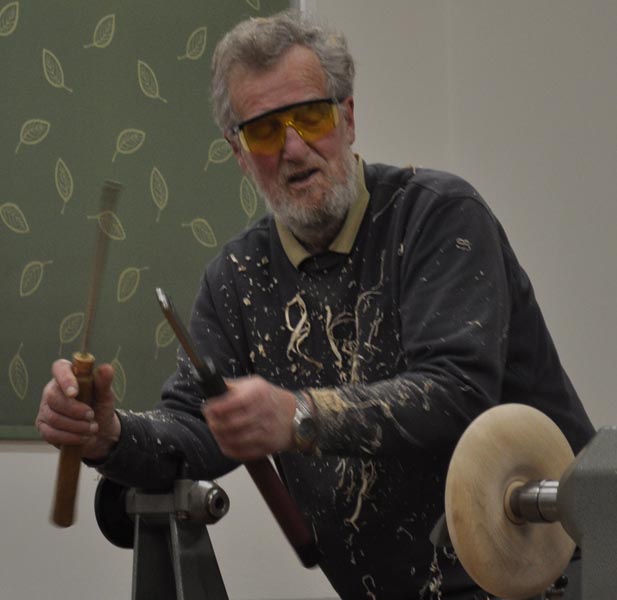
The piece was reversed - onto the same screwchuck, the hole drilled through - and the outside proflie repeated. The inside was then tackled using a variety of hollowing tools. A Hope bar with a carbide disc, then others with teardrop profile. John pointed out that the business end is in the tip and the holder - the handle can be anything, and can be self made.
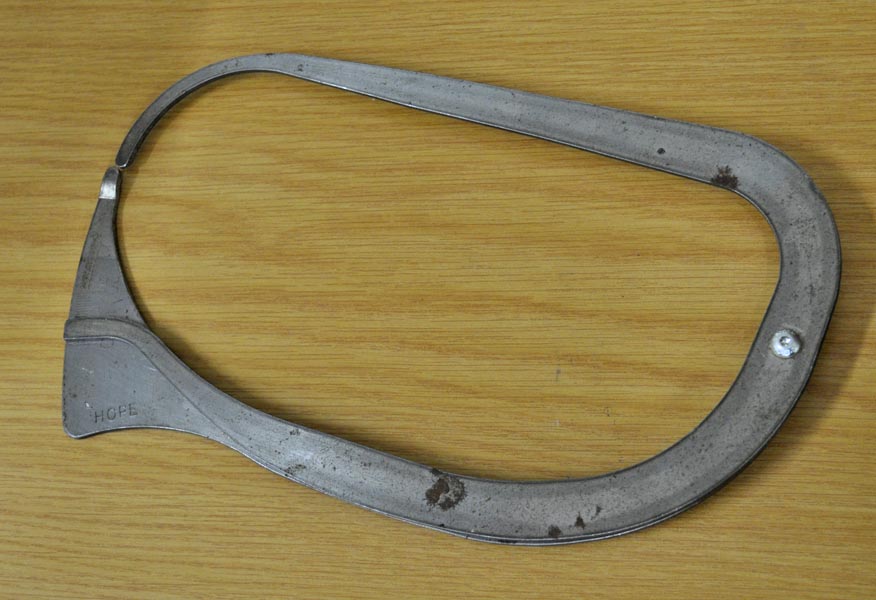
The torus was hollowed, with some checking with fingers and with calipers, to a reasonable thinness. It could be perhaps a little thinner to help with any piercing. The centre should be a little thicker than the outside - to help with stability.

With the torus hollowed out, the next task was to remove the centre. This was to be done using expanding Cole jaws. A test revealed the opening on the torus needed to be a little wider, so the piece was remounted and enough was shaved off to allow a good fit.
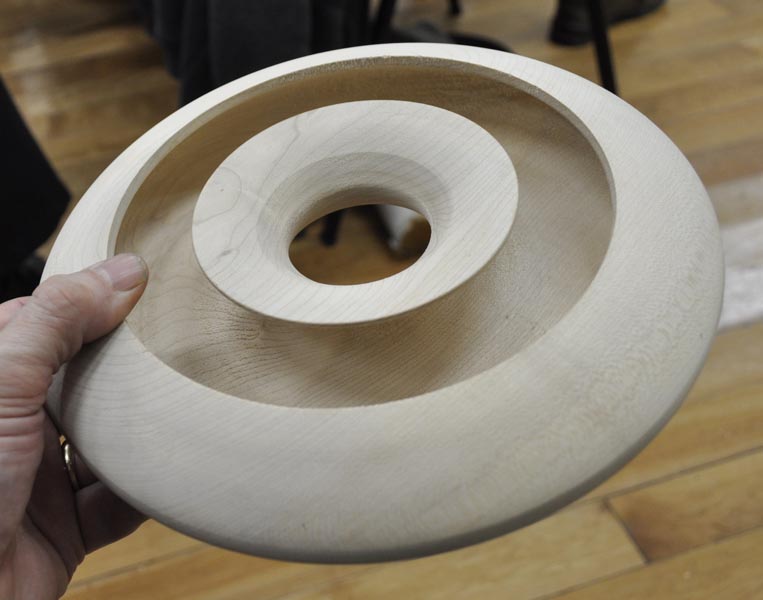
Held with the cole jaws against the outer rim, the centre was taken out and smoothed out to make the shape shown here. A little ligh sanding and the piece was finished. More hand sanding would be done to

John would normally complete one of these items by decorating with some piercing and possibly burning - see example below. As it was, an interesting shape had been produced, showing a variety of techniques.
Turning people profiles
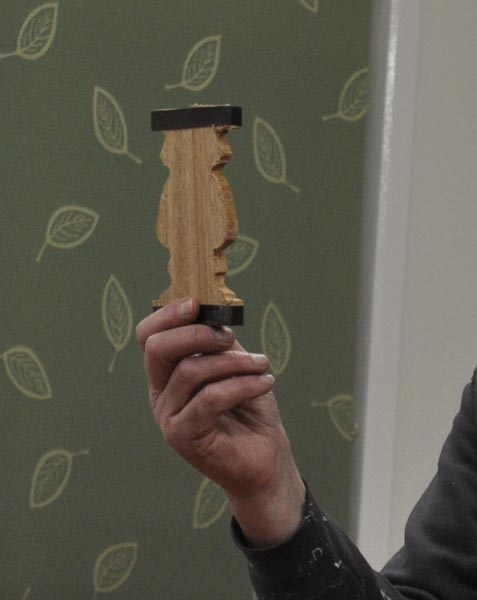
For a finale John decided to turn a double profile (front and rear) of Eddie. For this he took two relatively thin strips of wood, fastened them together at the top and bottom, and mounted them between a chuck and a ring centre, noting the essential use of a ring centre to avoi pushing a point into the joint.
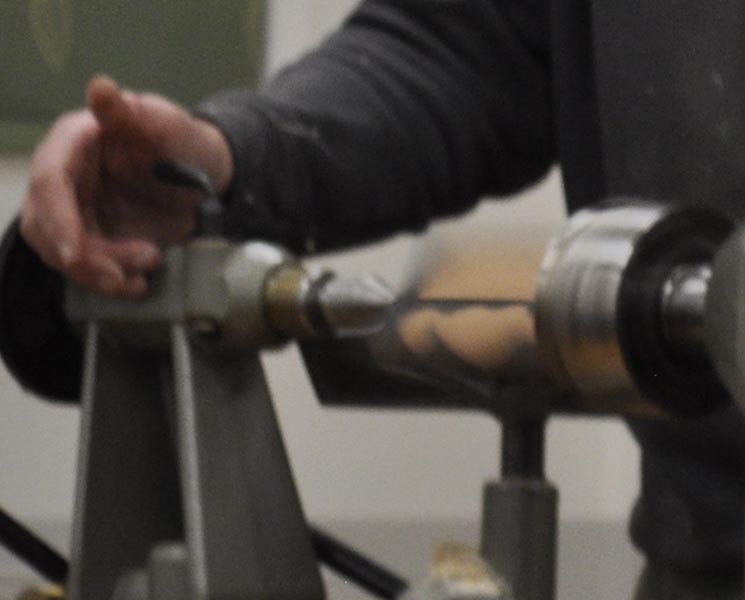
John warned this was an ambitious experiment and it may not work. It didn't, with pieces flying off to the back of the room. There were suggestions of using a fretsaw for such an item from the audience. John always feels it is worth trying "something different" .
Some of John's work and tools, plus the Chairman's Challenge.

Turned and pierced torus
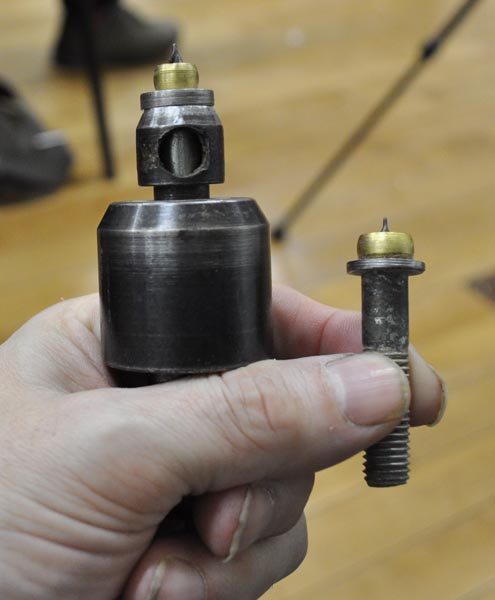
Ring centres made with plumbing fixtures
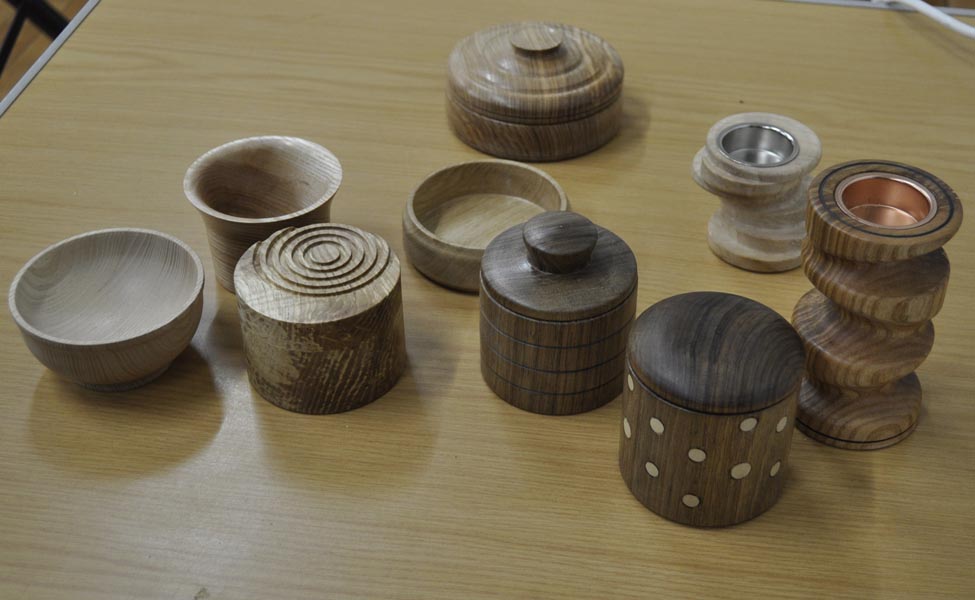
Chairman's challenge pieces
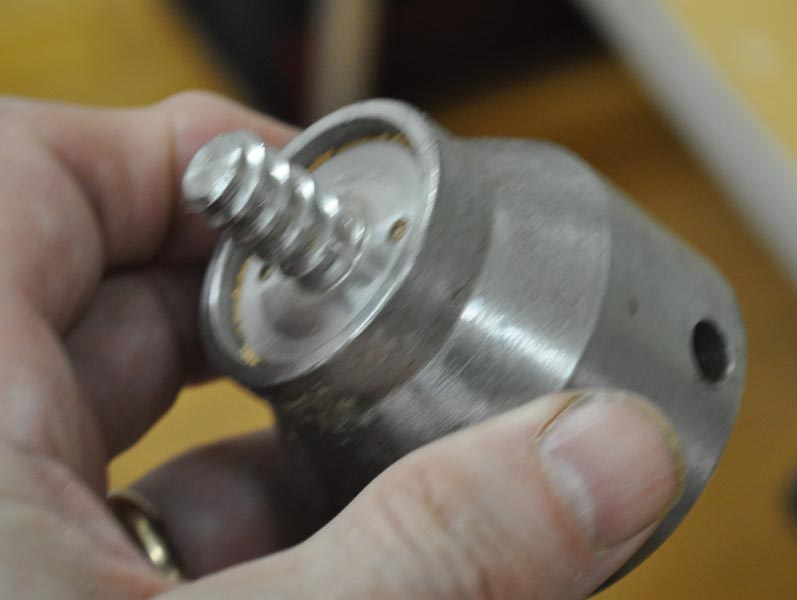
Screw chuck - Hegner?

Coloured hollowform
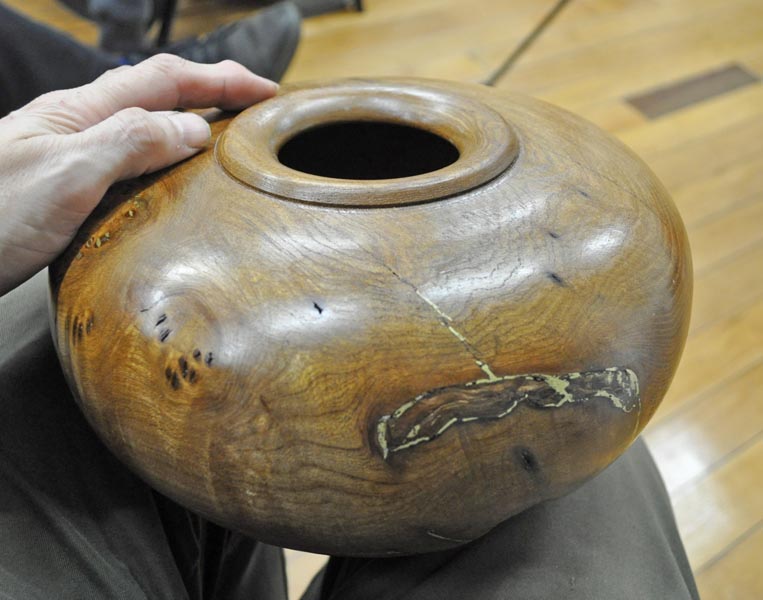
Hollow form with brass inlay
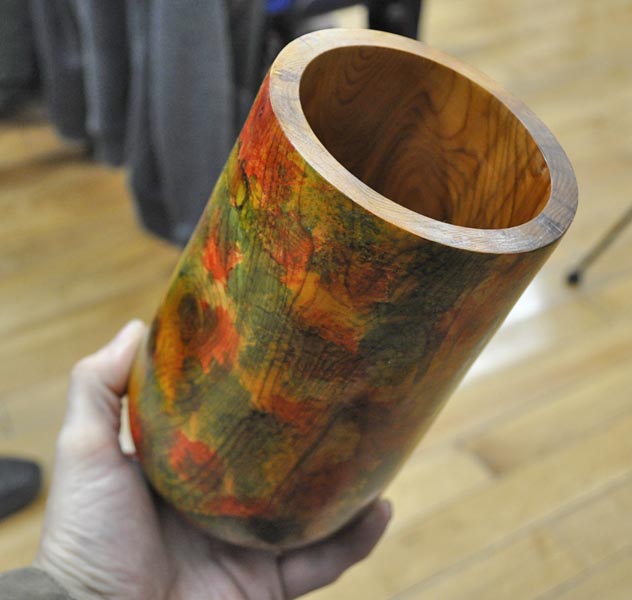
Coloured hollowform