Ryedale Woodturners
This website is being updated from August 2022. This is an archive page.

Steve Fearnley
Thursday 2 January 2020
Snainton Village Hall
Club treasurer and website manager Steve Fearnley stepped up for the first demonstration of the New Year (new decade!), having last done a formal demo at the club back in October 2016.
Summerhouse finials
 Steve introduced his demonstration with a talk about how making a replacement finial for a summerhouse in his garden had led to his website at oldfern.co.uk being the top "hit" on Google for people searching for "summerhouse finials". A handful of slides (shown below) illustrated the different shapes, sizes and timber of finials he has made.
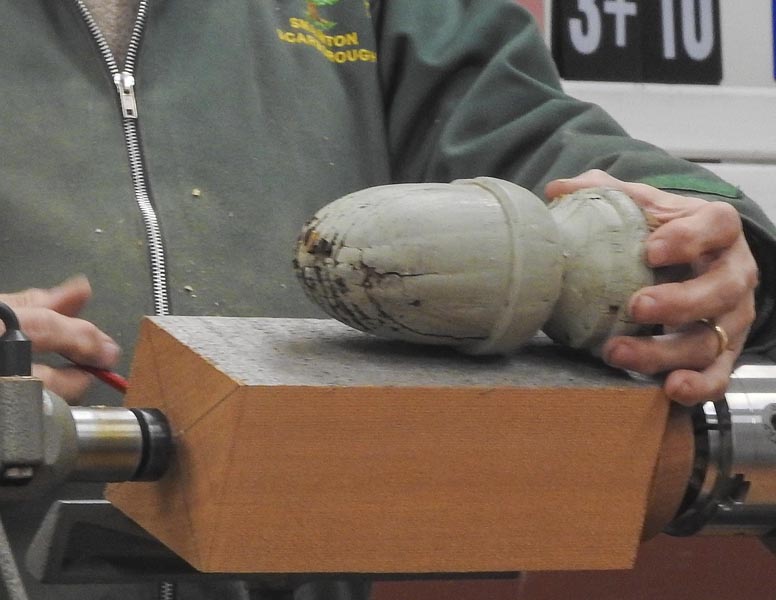
The summerhouse kit he bought came with a pine acorn. A good shape, but despite painting it rotted away within 4 to 5 years. Finials are inevitably exposed to the worst of the weather, and to birds using them as perches and inevitably toilets!

A 4 x 10" Western red cedar blank was mounted using a home made screw chuck, using the same 8 mm dowel screw that will be used to fix the acorn to the base. A 6 mm hole was drilled to take it - cedar is soft and a 7 mm hole does not give enough grip. These screw chucks have a surprisingly good grip.

Steve used a large (inch and a half diameter) roughing gouge ground with a 30 degree bevel, rather than the more usual 45 degrees. This gives a smoother cut with less tearout. With the basic shape cut, he then used a fingernail half-inch spindle gouge, again ground to 30 degrees, to create the acorn cup, and to refine the pointed top a little.
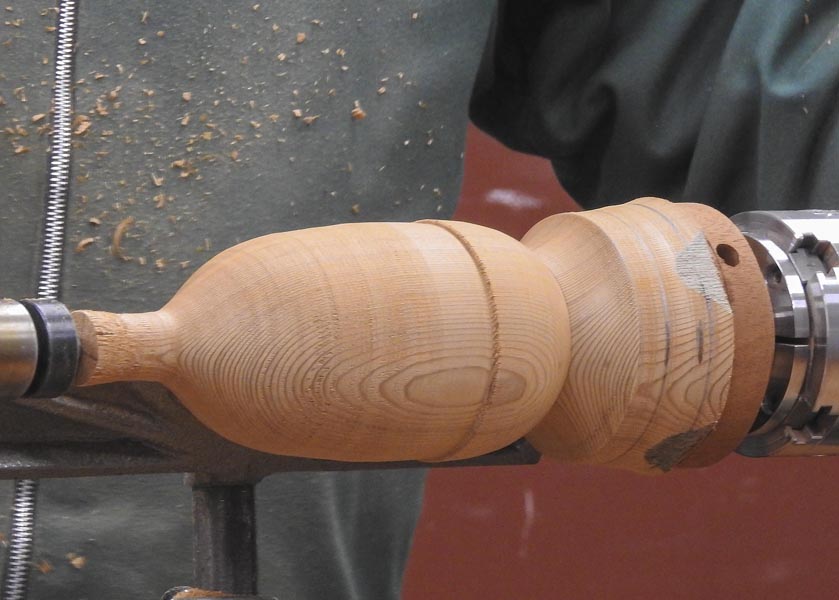
Steve's current ambition is to shape these finials with almost no tear out, and minimal sanding. Cedar is very brittle and very prone to tearout when cutting across the grain. He has been using a Spindlemaster to help - sort of a skew but rounded.
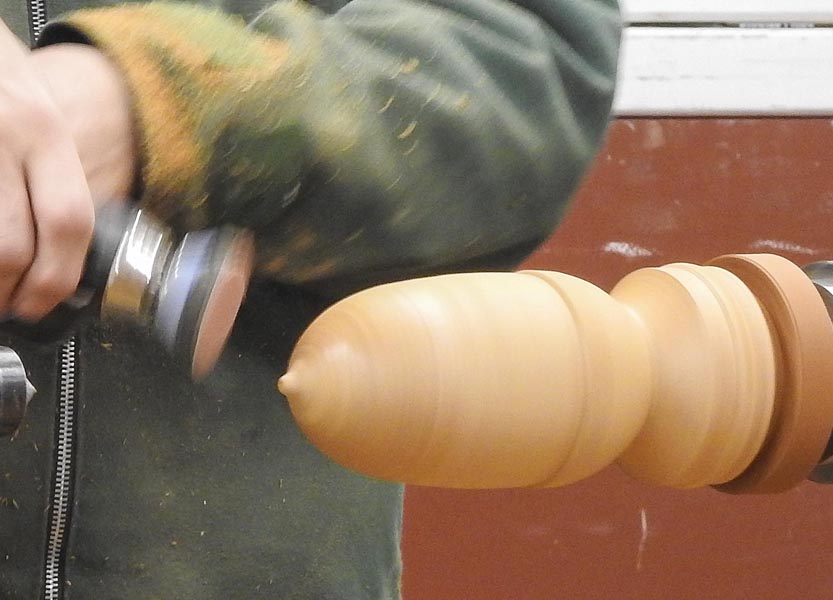
Steve's relative inexperience at demonstrating meant he was always up against the clock for what he had intended to show, hence just a quick sand, with no real attempt to take the acorn through to a finish.
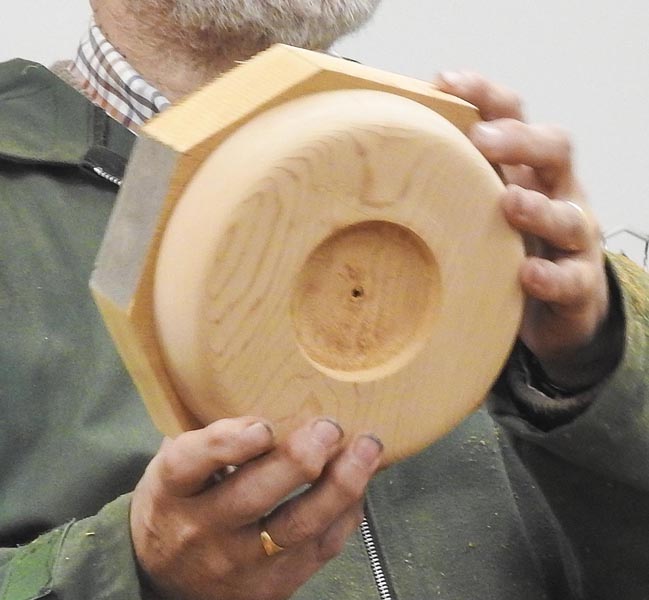
He wanted to show the problems posed by the base. Being faceplate turning, it was far more likey to suffer tear out on the cross-grain areas.
Some bases he makes are requested as octagons - easier as they can be cut and sanded flat on each side.

Steve turned an 8" blank to round using a standard 45 degree bowl gouge. The top surface was relatively easy, but the edges tear on the two cross-grain sections. Improvement can be made with careful use of the spindlemaster, and also slow and steady traversing of the wood with the gouge.
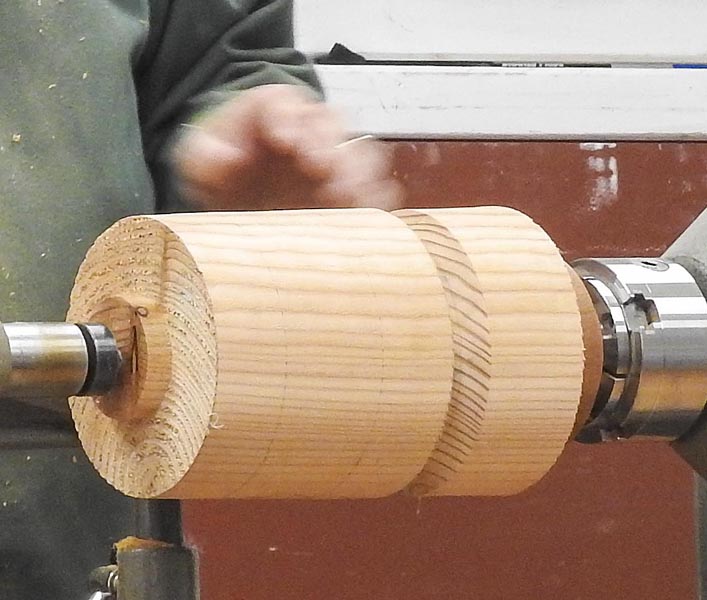
Again, this base was not taken to a finish once turned to shape, as Steve wanted to move on and look at his other main timber for finials - larch. Very wide pronounced grain, and very prone to severe tear-out. Sharp tools and the 30 degree bevel form Steve's current strategy for larch.

The blank was to be turned into a sphere on a plinth, using a method of creating an octagonal shape to start with, then taking off the corners. The measurements for this octagon, based on multiples of the diameter, are available as a pdf.
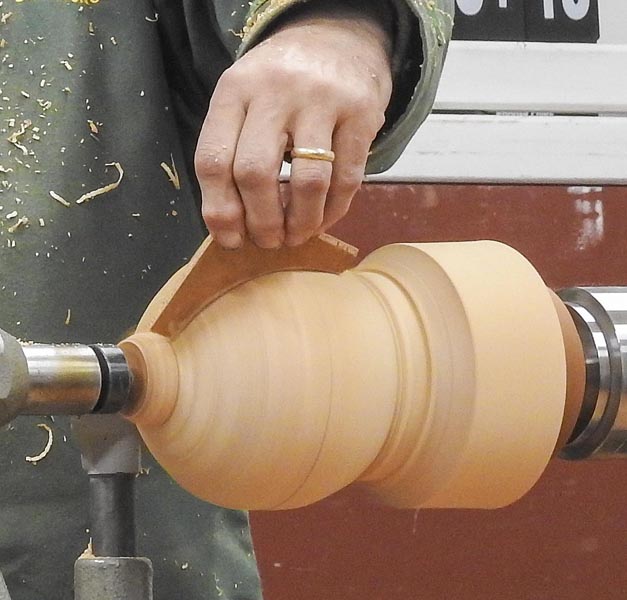
The sphere was shaped by eye, using a quarter circle guide cut from plywood to suit the diameter. Steve had tried a sphere turning jig (Paul Howard's), but found this increased the grain tear-out. Again with time running out, only the top half was turned to shape. There was too much tearout for Steve's liking, and despite attempts with different tool, he could not improve this by much. A vibration in the lathe was probably causing the problem: probably due to remounting the blank on a screw chuck and not spending enough time ensuring it was running true. Steve will finish all the pieces at home and bring them to the next meeting to observe.
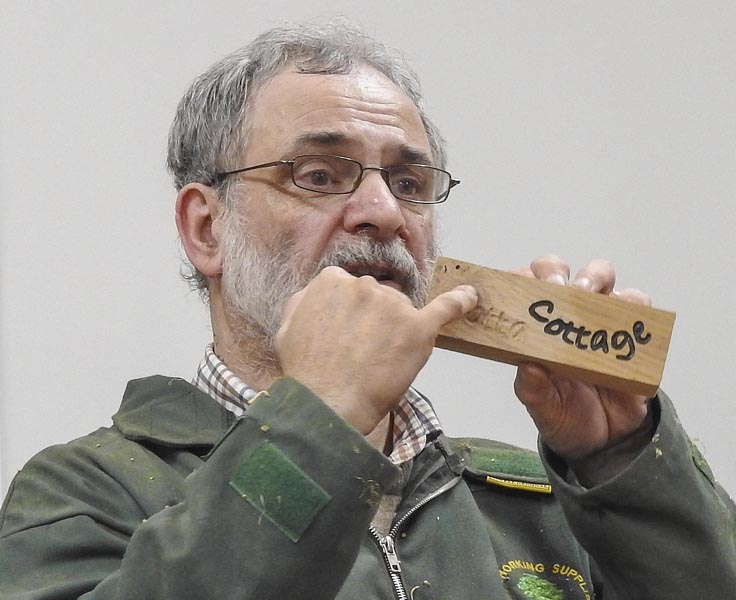
Under the umbrella of "turning for outdoors" Steve had intended showing his methods for creating outdoor signs, but at 9:45 pm it was more sensible to have a quick look, and make this his contribution to the Hands On night at the February meeting.
Some of the slide show pictures. There are more on oldfern.co.uk

Summerhouse DIY kit assembled
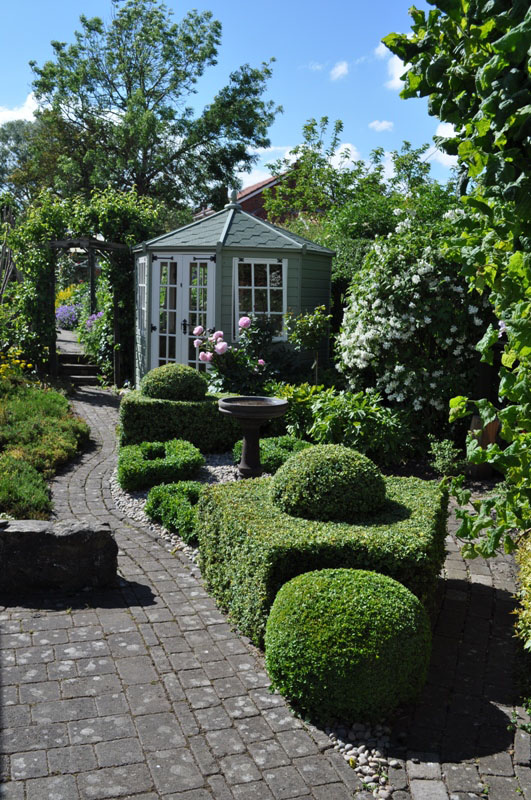
Finished summerhouse

Clearing the ivy from the pergola
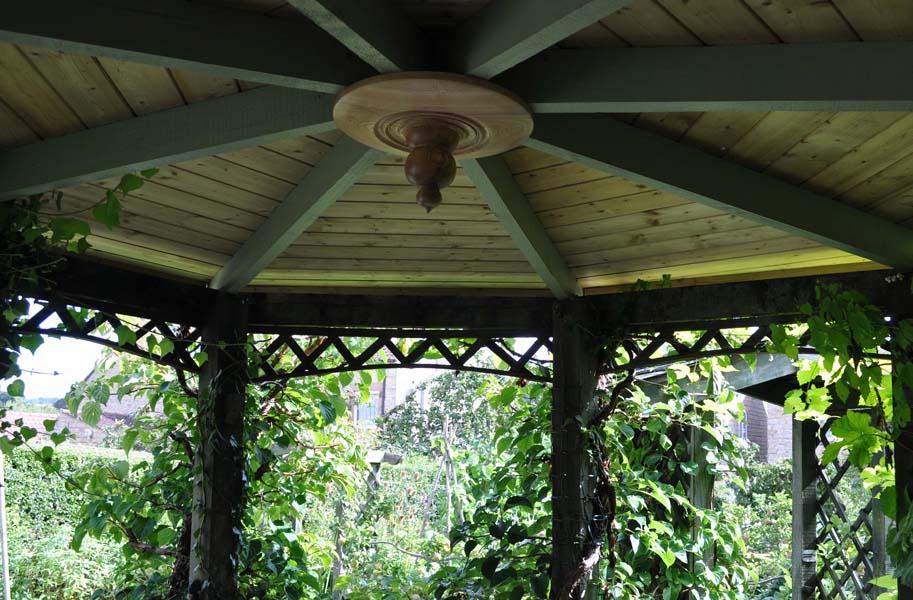
Roof boss under the pergola

Acorn endcaps on the pergola
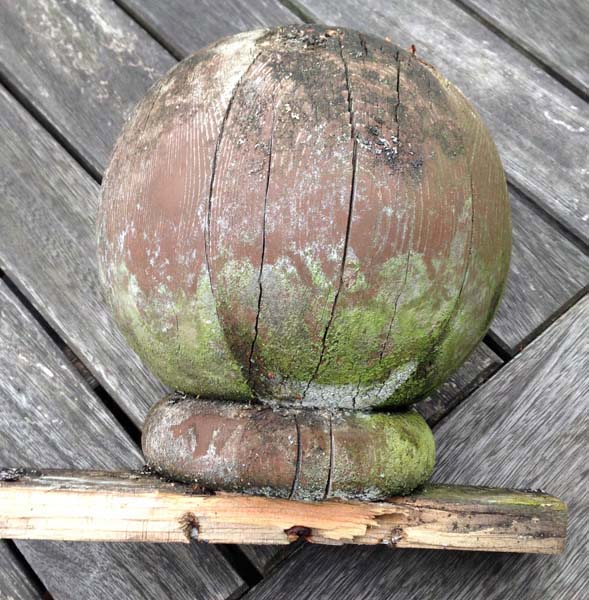
Old finial in need of replacement
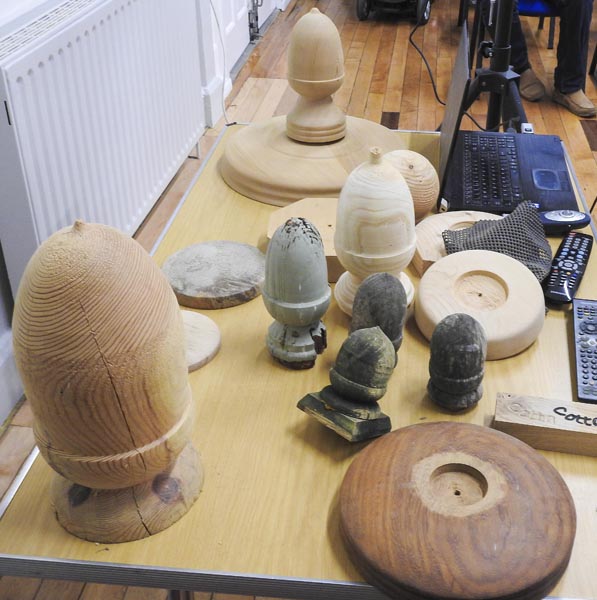
Examples at the demonstration
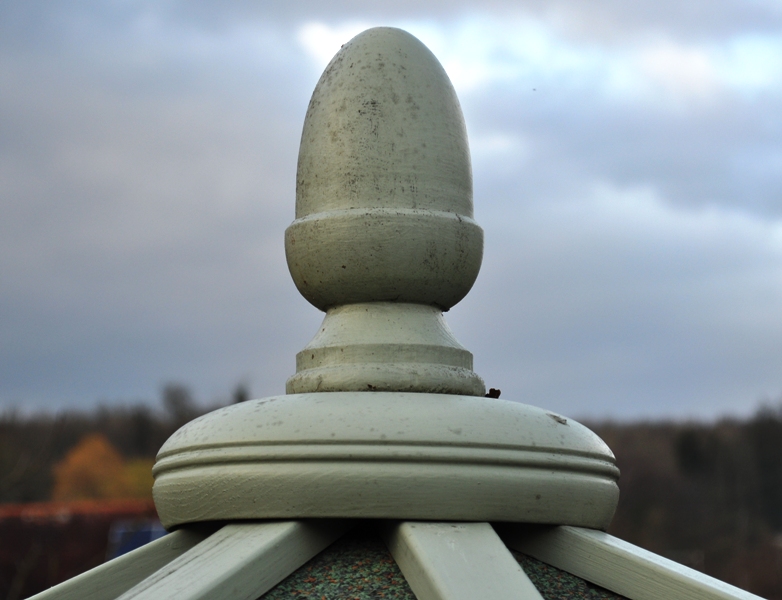
Original acorn finial

Roof boss inside

Oak post caps (3" diameter)
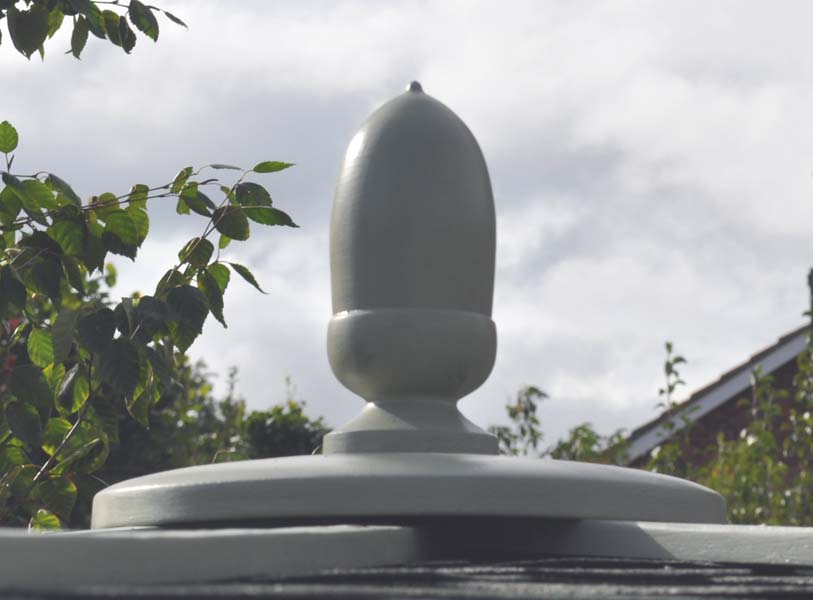
Acorn finial on the pergola

Large onion shaped finial (12")
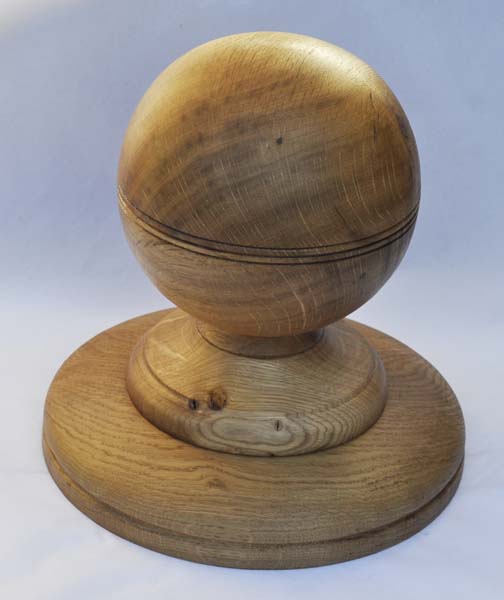
A replacement oak sphere

Different size and shape finials

Classic acorn finial on 7" base

Tiered base for acorn finial

Spherical finial in larch

A pair of finials for a shed
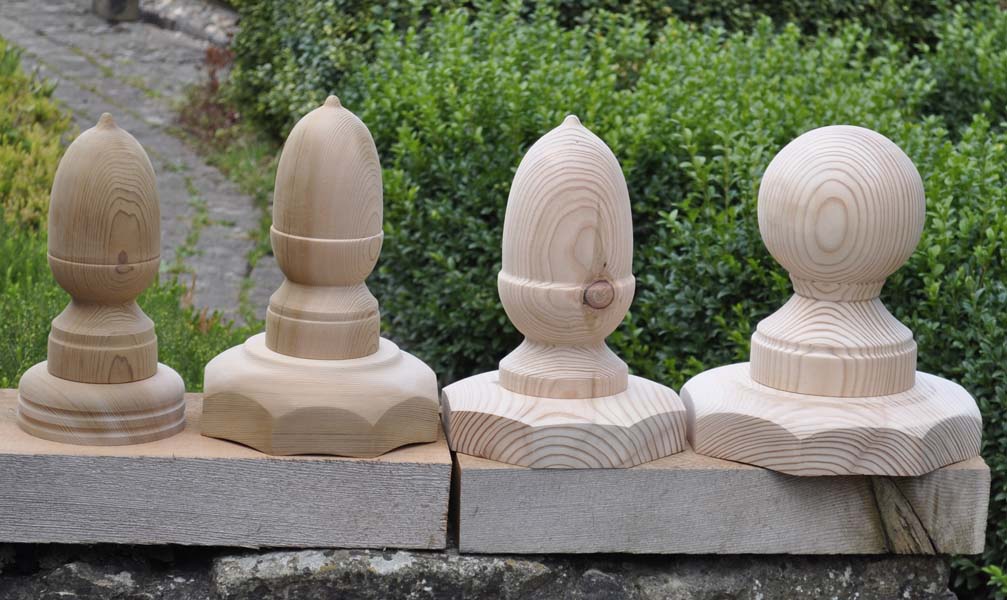
Different size and shape finials
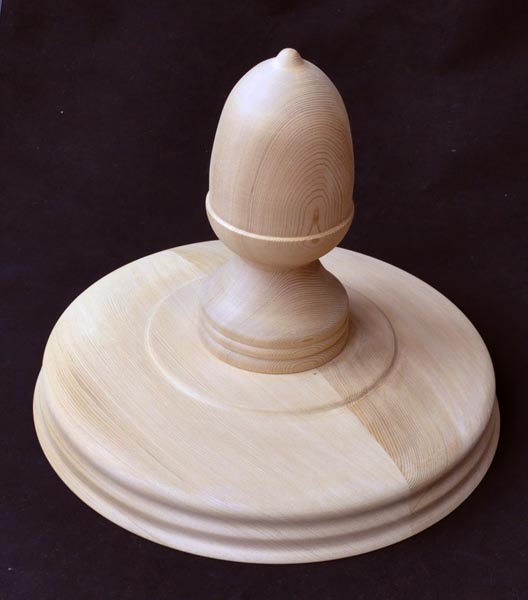
Acorn finial on a 15" base

Octagonal base acorn finial

Spherical cedar finial

Finial in situ - new and old cedar

A thistle for an Edinburgh garden