Ryedale Woodturners
This website is being updated from August 2022. This is an archive page.
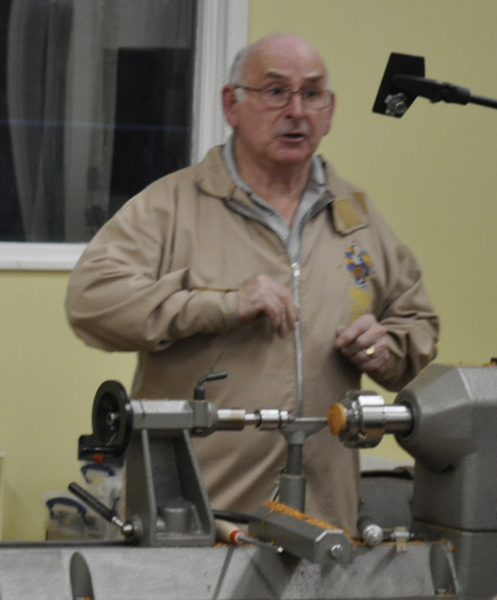
Gerry Marlow
Thursday 2 May 2019
Snainton Village Hall
Gerry last visited us when we were Snainton Woodturning Club, back in April 2015. He was talking of giving up evening demonstrations even then, but this time he really means it - no more late night drives home once he has fulfilled existing commitments.
Small box on a wave stand
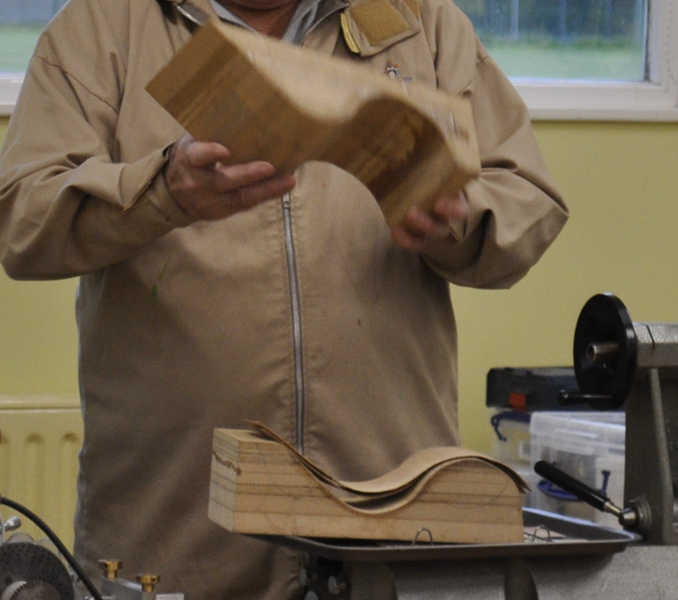
Gerry started off by showing us a former he uses to make an S-shaped stand, made from 2 pieces thinly cut on the bandsaw laminated together. They are soaked in boiling water, then allowed to cool, before clamping in to the pre-made former.
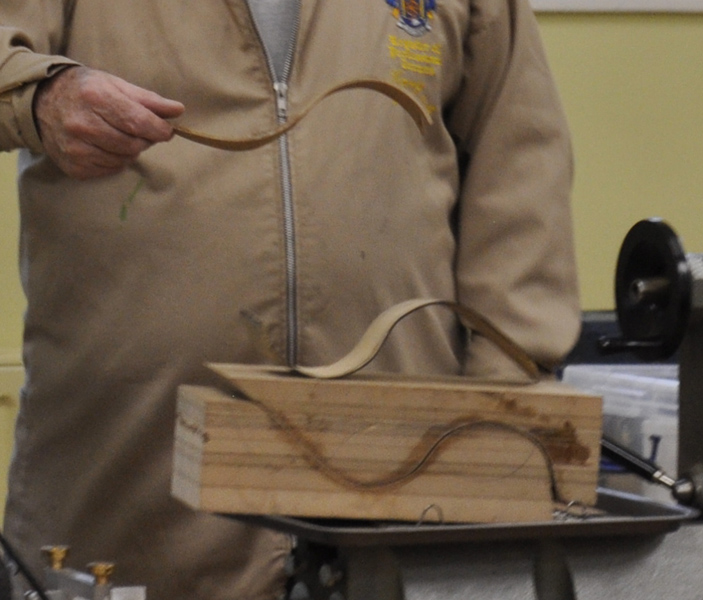
He pointed out that the gap between the two pieces of the former needs to match the thickness of the two lamina. If he wanted to use three pieces, either they would have to be thinner or he would have to cut another mould. Apply plenty of glue between the pieces.

Whilst looking at laminate shapes, he also showed us how he made a teardrop shape from some thin strips, clamped to another mould with a strap clamp. Ably assisted by our chairman Keith, who was kept on his toes through the night acting as "gofer".
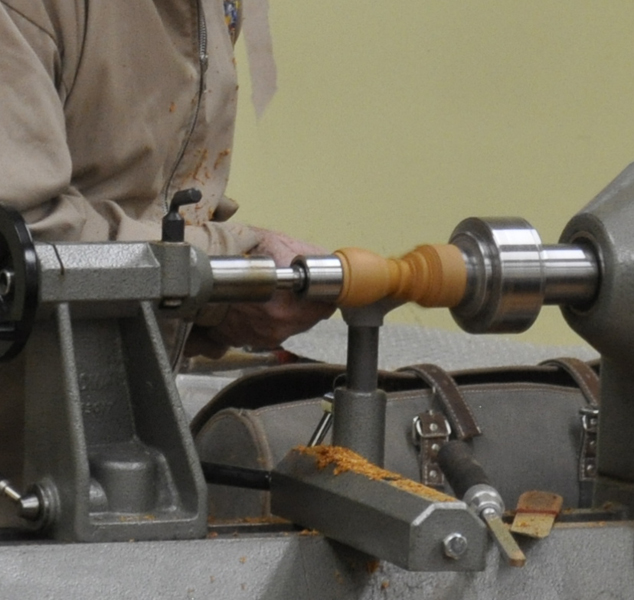
Gerry turned a piece of yew to make a box with a pointed base, that would fit into a hole drilled in the S-shaped moulded stand. Nothing particularly unusual about this, until he came to the lid.

Turned to fit the box from the same piece of timber, the lid was then placed on Gerry's "ornamental lathe", a small home made device often known as a rose engine. This can produce Spirograph like patterns in wood, working away on its own once the piece is clamped into the chuck.
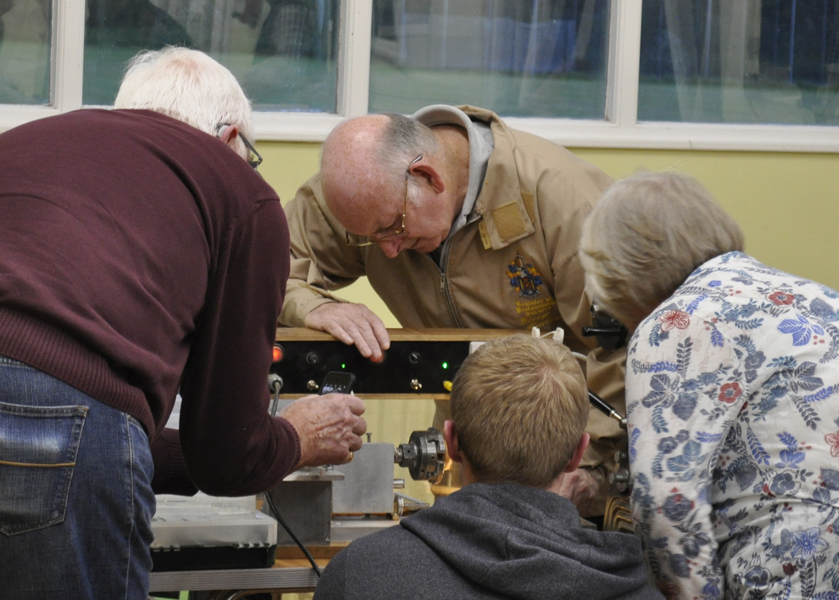
Gerry invited people up for a closer look at the engine in action, an offer which many took up, crowding round the strange little device as it churned away, finally producing the design shown above.

The box was then fixed to the wave-stand drilled to accept the stem of the box, the lid was turned to fit the box, and the whole resulted in an unusual and interesting piece for the first part of the evening.
Ring holder with tray

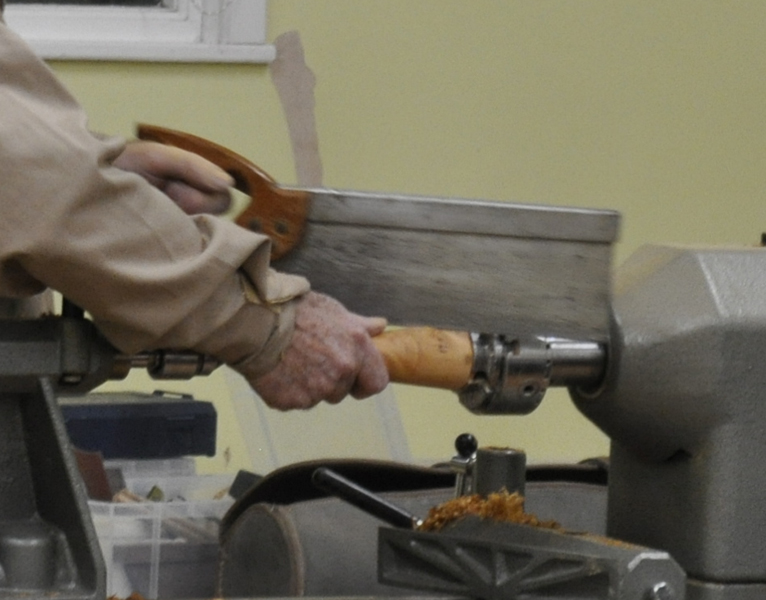
For the second half of the evening, Gerry turned a cone from yew, and then cut it at an angle of about "so much", using a trusty old tenon saw. This was to form the first part of a ring holder and box.
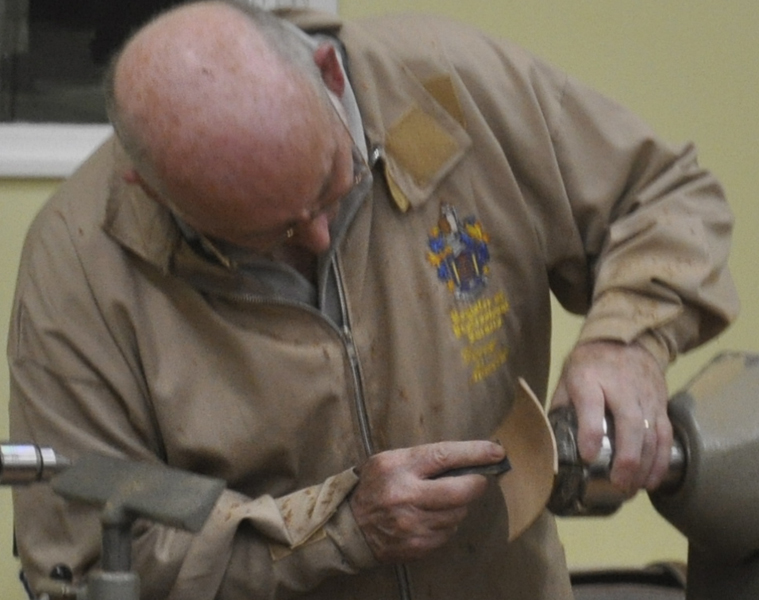
Next Gerry turned a square edged dish to fit on the cone, which would act as a tray for any jewellery that did not hang over the cone. Some sanding while revolving, corners sanded when stationary - with the grain of course.
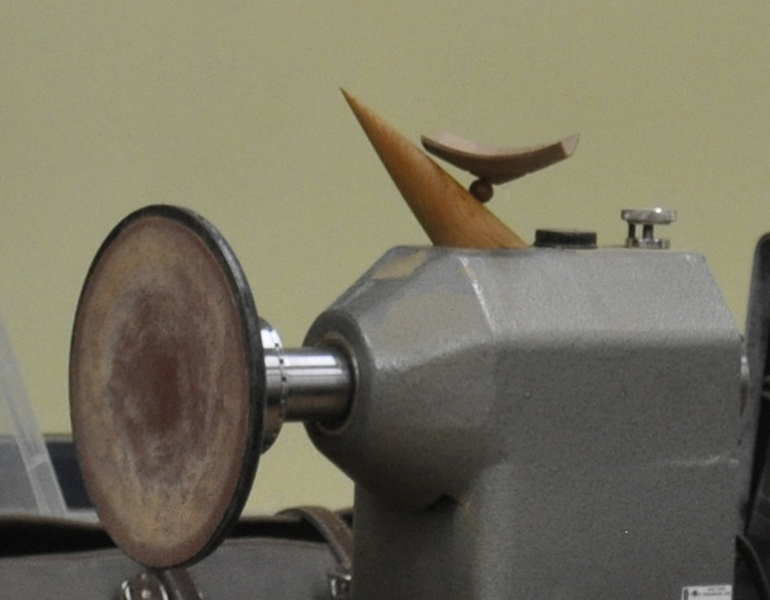 The dish
was attached to the cone with a small pegged ball. The base of the cone was trued up on a large sanding disc that Gerry fixed to the lathe. The finished result was a different interpretation of the standard ring tree.
The dish
was attached to the cone with a small pegged ball. The base of the cone was trued up on a large sanding disc that Gerry fixed to the lathe. The finished result was a different interpretation of the standard ring tree.
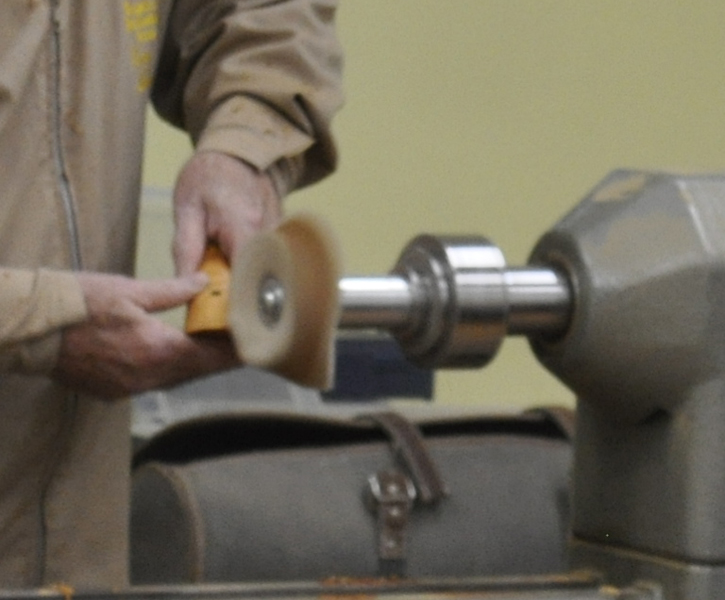
With a few minutes spare, Gerry buffed the pieces up with two coats of wax - Tripoli and carnauba. He missed out the usual white diamond in the middle, because the timber was open grained.
More from Gerry Marlow, plus club members' items

Gerry's rose engine
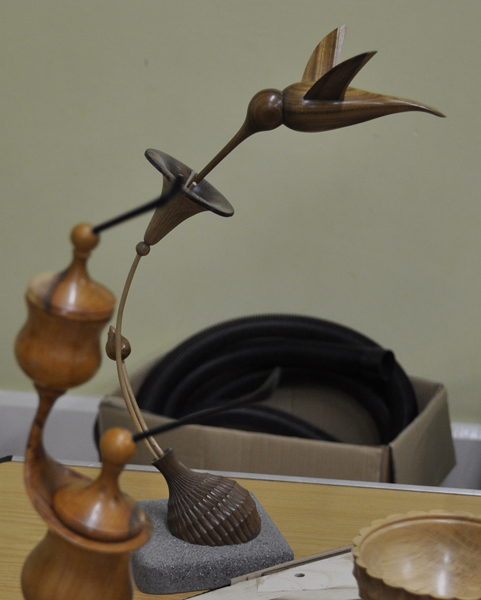
Humming bird by Gerry Marlow

Rose engine decoration
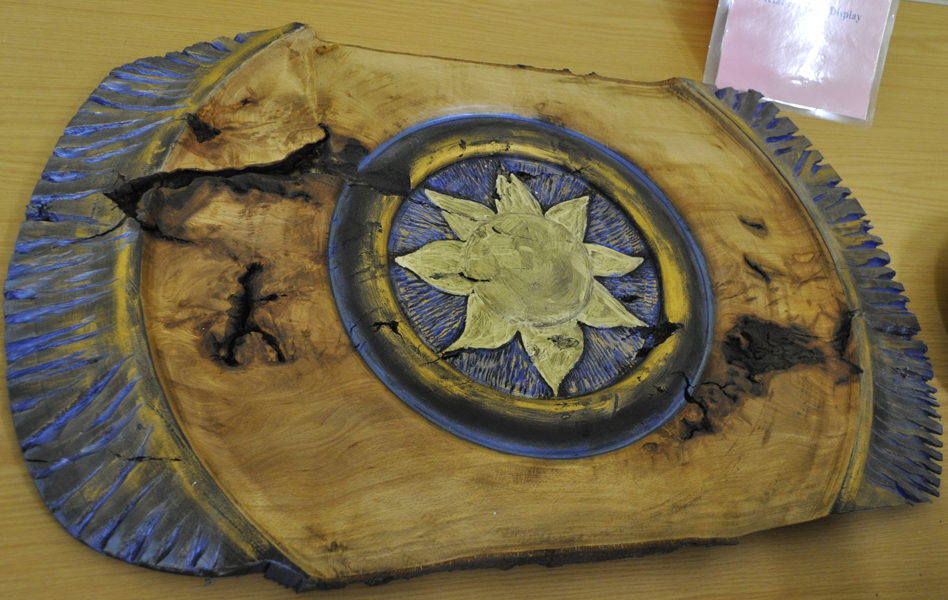
Wall hanging - Lance?
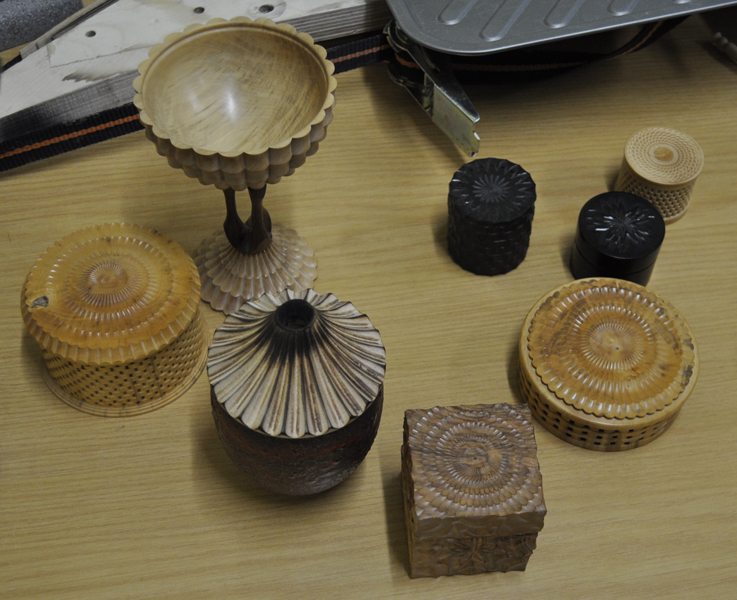
Rose engine ornaments
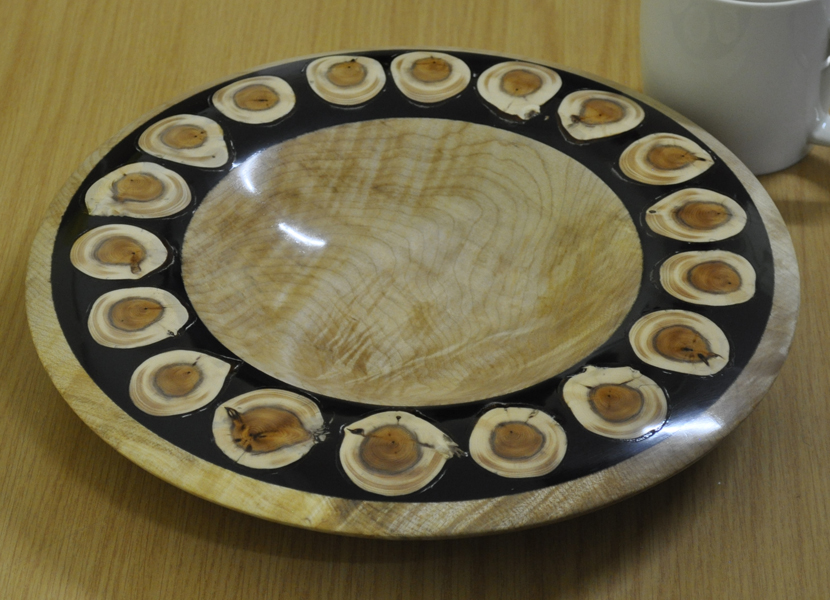
Lance's log slices inset in resin
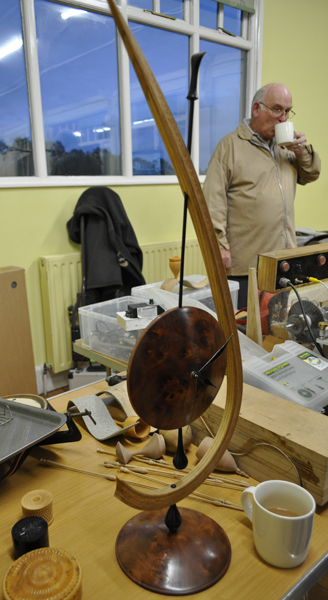
Suspended clock - Gerry Marlow