
Philip Greenwood
Thursday 7 March 2019
Snainton Village Hall
Former club chairman Philip Greenwood made a welcome return to the club to give a demonstration showing accurate use of a few basic (sharp) tools can produce good quality items. Philip maintains that most items can be turned with six basic tools - roughing gouge, spindle gouge, bowl gouge, parting tool, skew, and scraper.
Hollowed vase or trinket box

Philip showed us his techniques for making a small hollowed vase, essentially turned as a box, with the two parts glued together once the inside had been hollowed out. With only slight modification, this could also be a trinket box.
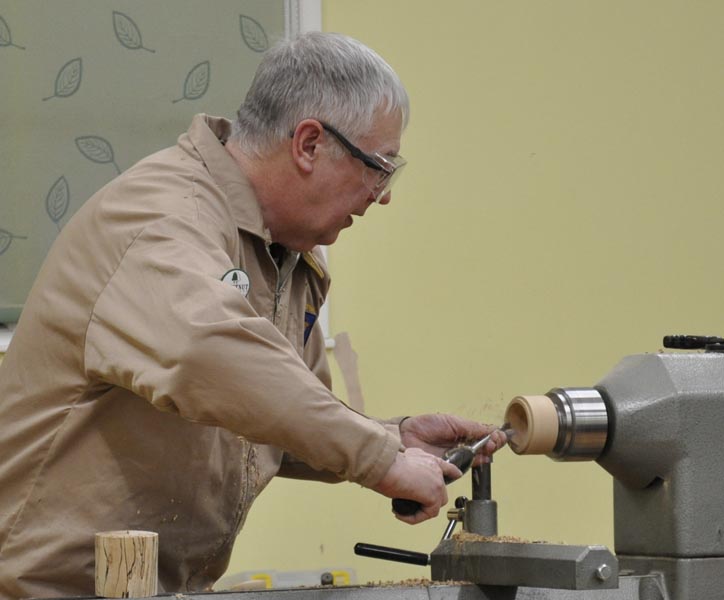
A spalted beech blank was turned to round, then parted at about 2/3 of the height. The top was hollowed out with a spindle gouge, it being shallow enough for this to reach in and hollow. The inside would be left unsanded, the finish from the tool sufficient for an unseen surface.
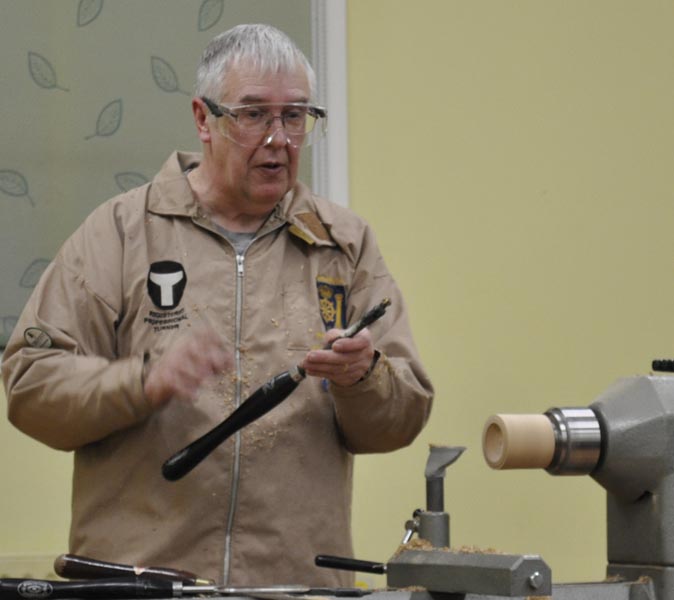
Philip also showed how a round nosed scraper can be used for hollowing. Probably best for finishing after the main work is done by the spindle gouge, but it does the job. He also used a Crown revolution tool - this can be quite agressive, probably better on deeper items.

Another option is the Hope hollowing bar - a one-piece square bar with handle, with a carbide tip set at a fixed angle. The square bar helps ensure the disc is presented to the wood at the correct cutting angle. The carbide disc can be rotated to maintain a sharp edge, and replaced when exhausted.
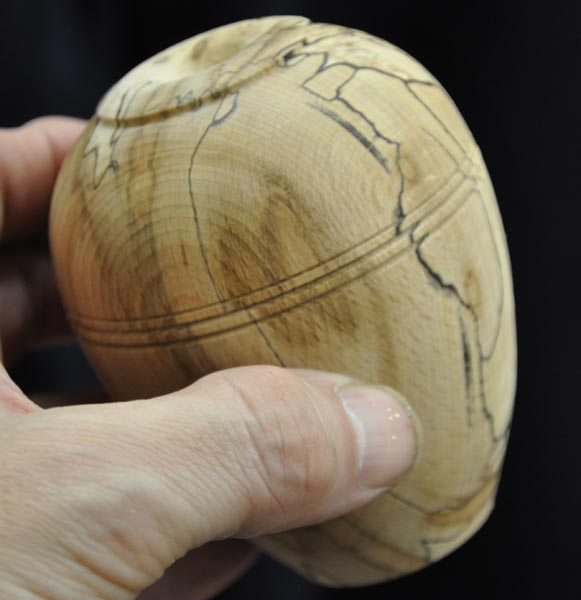
With top and base hollowed, the base was mounted in the chuck and the top jammed on - courtesy of a tight fitting lip expertly cut. Friction was sufficient to allow the top to be shaped and a small hole cut through. Three rings were cut to disguise the join and deflect from the inevitable slight loss of pattern / grain matching.
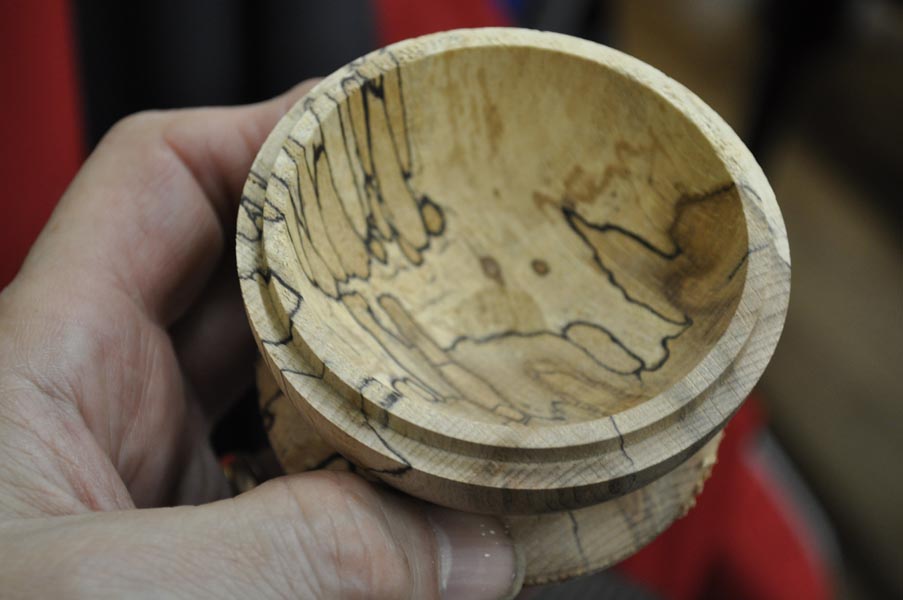
The piece was not sanded on the night, but would be later on. It was a pretty good finish off the tool, especially given the timber being spalted. This piece would be glued later, probably with PVA. The glue needs to allow some movement to align the grain - CA might set too quickly.
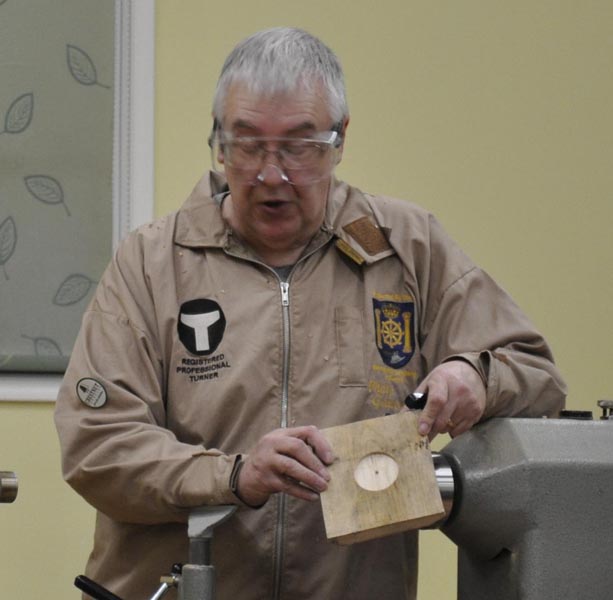
With a few minutes spare, Philip offered a choice of early finish or a quick square bowl. Members voted for their money's worth - the extra piece. Philip started with a fairly thin square blank, with a recess already drilled. It was shaped, a spigot added, and reversed.
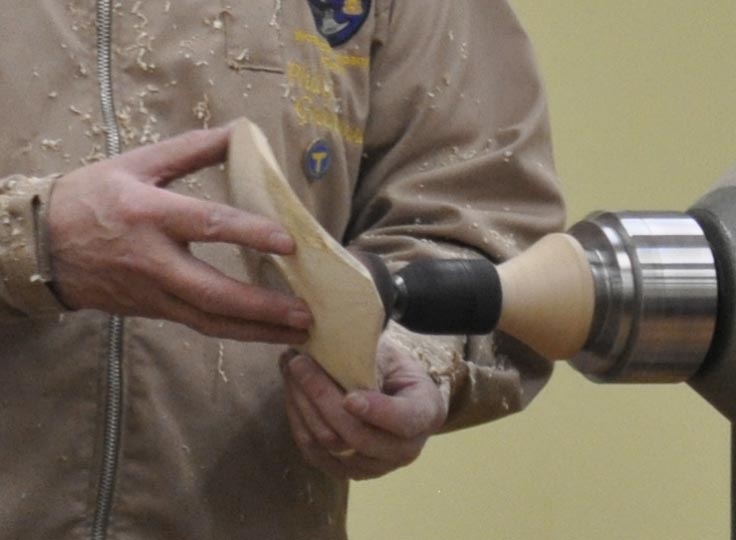
To sand the piece, a sanding arbor was fixed in a drill chuck mounted in a shopmade holder. The dish can then be manipulated onto the sander, rather than the more usual other way round. Rotating corners do not work well with normal sanding methods.
Extra photos and club members' work
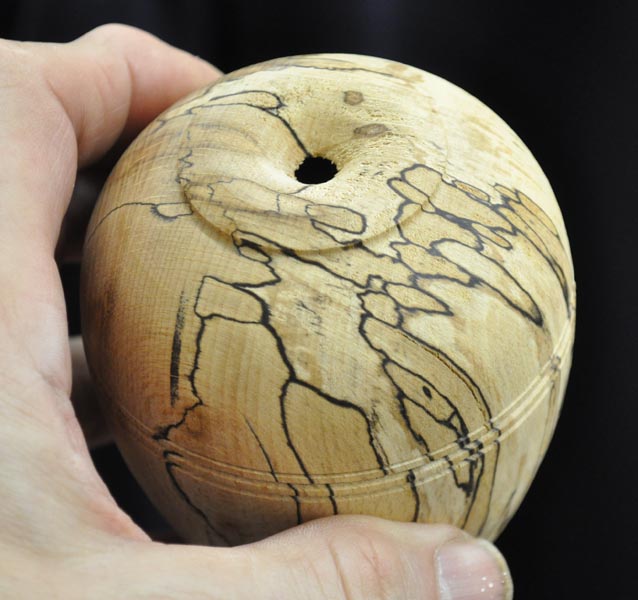
The vase from the top

Three pieces on the members' turning table
Checking the shape vertically while still in the chuck
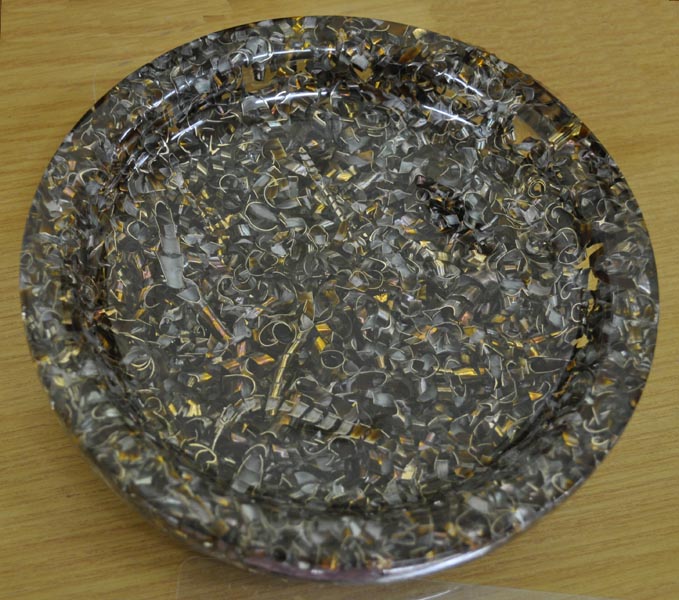
A bowl turned from resin
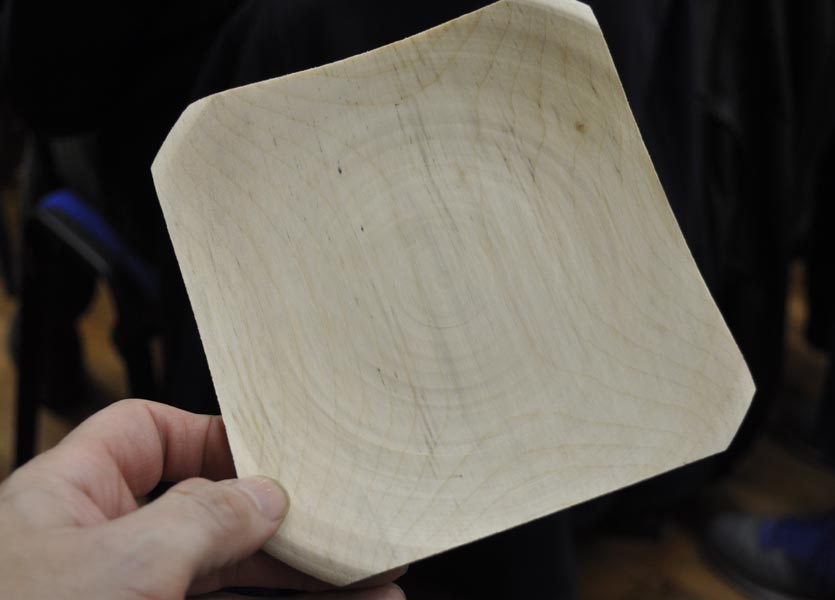
Square edge bowl top
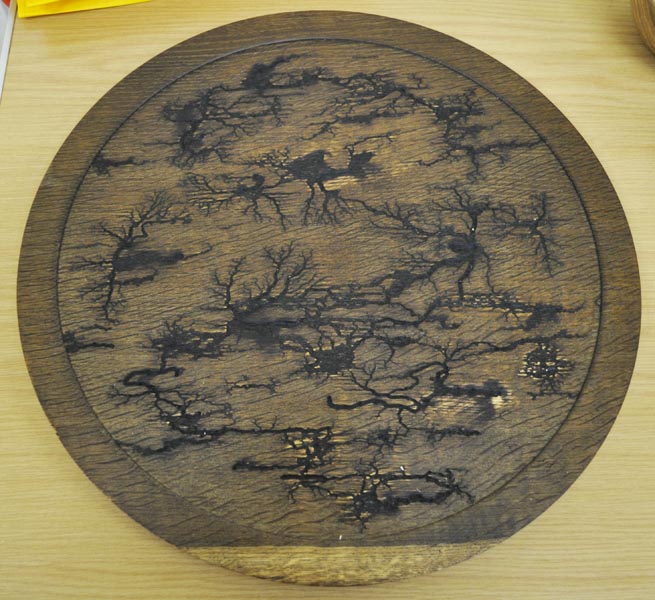
Lichtenberg etching involves high voltages being passed through the wood
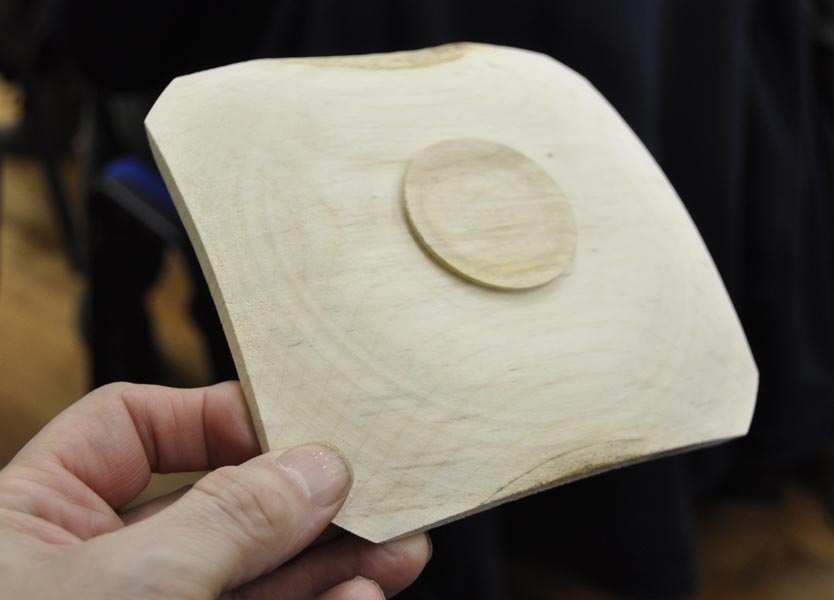
Square edge bowl - underneath
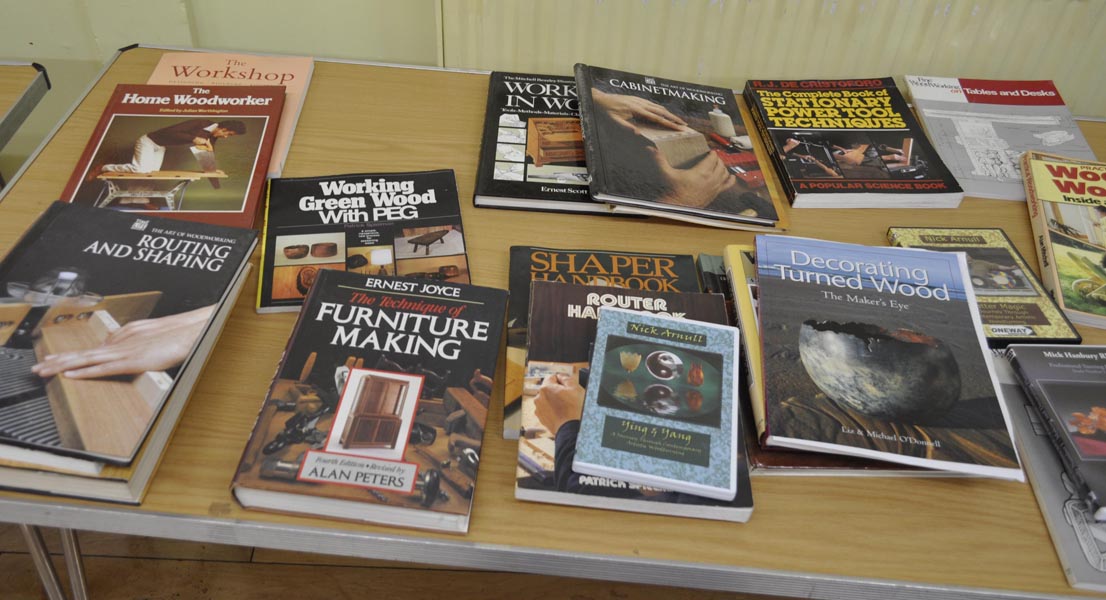
Books for sale for charity - £2 each from Malcolm